The giant leaps in language technology — and who’s left behind | Kalika Bali

Visit http://TED.com to get our entire library of TED Talks, transcripts, translations, personalized talk recommendations and more.

Thousands of languages thrive across the globe, yet modern speech technology — with all of its benefits — supports just over a hundred. Computational linguist Kalika Bali dreams of a day when technology acts as a bridge instead of a barrier, working passionately to build new and inclusive systems for the millions who speak low-resource languages. In this perspective-shifting talk, she outlines what happens when a language is omitted from the digital landscape — and what can be gained when communities keep pace with the future.

The TED Talks channel features the best talks and performances from the TED Conference, where the world’s leading thinkers and doers give the talk of their lives in 18 minutes (or less). Look for talks on Technology, Entertainment and Design — plus science, business, global issues, the arts and more. You’re welcome to link to or embed these videos, forward them to others and share these ideas with people you know.

Become a TED Member: http://ted.com/membership
Follow TED on Twitter: http://twitter.com/TEDTalks
Like TED on Facebook: http://facebook.com/TED
Subscribe to our channel: http://youtube.com/TED

TED’s videos may be used for non-commercial purposes under a Creative Commons License, Attribution–Non Commercial–No Derivatives (or the CC BY – NC – ND 4.0 International) and in accordance with our TED Talks Usage Policy (https://www.ted.com/about/our-organization/our-policies-terms/ted-talks-usage-policy). For more information on using TED for commercial purposes (e.g. employee learning, in a film or online course), please submit a Media Request at https://media-requests.ted.com

Meditations on the intersection of humanity and technology | Olivia Arthur

Visit http://TED.com to get our entire library of TED Talks, transcripts, translations, personalized talk recommendations and more.

Documentary photographer Olivia Arthur has been exploring a new frontier: the evolution of the blurring line between humanity and technology. In this meditative talk, she shows her work documenting the remarkable ways humans have merged with machines — from bionics and motorized limbs to synthetic muscles and strikingly realistic robots — and offers wisdom on the complexity, adaptability and resilience of the human body.

The TED Talks channel features the best talks and performances from the TED Conference, where the world’s leading thinkers and doers give the talk of their lives in 18 minutes (or less). Look for talks on Technology, Entertainment and Design — plus science, business, global issues, the arts and more. You’re welcome to link to or embed these videos, forward them to others and share these ideas with people you know.

Become a TED Member: http://ted.com/membership
Follow TED on Twitter: http://twitter.com/TEDTalks
Like TED on Facebook: http://facebook.com/TED
Subscribe to our channel: http://youtube.com/TED

TED’s videos may be used for non-commercial purposes under a Creative Commons License, Attribution–Non Commercial–No Derivatives (or the CC BY – NC – ND 4.0 International) and in accordance with our TED Talks Usage Policy (https://www.ted.com/about/our-organization/our-policies-terms/ted-talks-usage-policy). For more information on using TED for commercial purposes (e.g. employee learning, in a film or online course), please submit a Media Request at https://media-requests.ted.com
How technology changes our sense of right and wrong | Juan Enriquez

Visit http://TED.com to get our entire library of TED Talks, transcripts, translations, personalized talk recommendations and more.

What drives society’s understanding of right and wrong? In this thought-provoking talk, futurist Juan Enriquez offers a historical outlook on what humanity once deemed acceptable — from human sacrifice and public executions to slavery and eating meat — and makes a surprising case that exponential advances in technology leads to more ethical behavior.

The TED Talks channel features the best talks and performances from the TED Conference, where the world’s leading thinkers and doers give the talk of their lives in 18 minutes (or less). Look for talks on Technology, Entertainment and Design — plus science, business, global issues, the arts and more. You’re welcome to link to or embed these videos, forward them to others and share these ideas with people you know.

Follow TED on Twitter: http://twitter.com/TEDTalks
Like TED on Facebook: http://facebook.com/TED
Subscribe to our channel: http://youtube.com/TED

TED’s videos may be used for non-commercial purposes under a Creative Commons License, Attribution–Non Commercial–No Derivatives (or the CC BY – NC – ND 4.0 International) and in accordance with our TED Talks Usage Policy (https://www.ted.com/about/our-organization/our-policies-terms/ted-talks-usage-policy). For more information on using TED for commercial purposes (e.g. employee learning, in a film or online course), please submit a Media Request at https://media-requests.ted.com
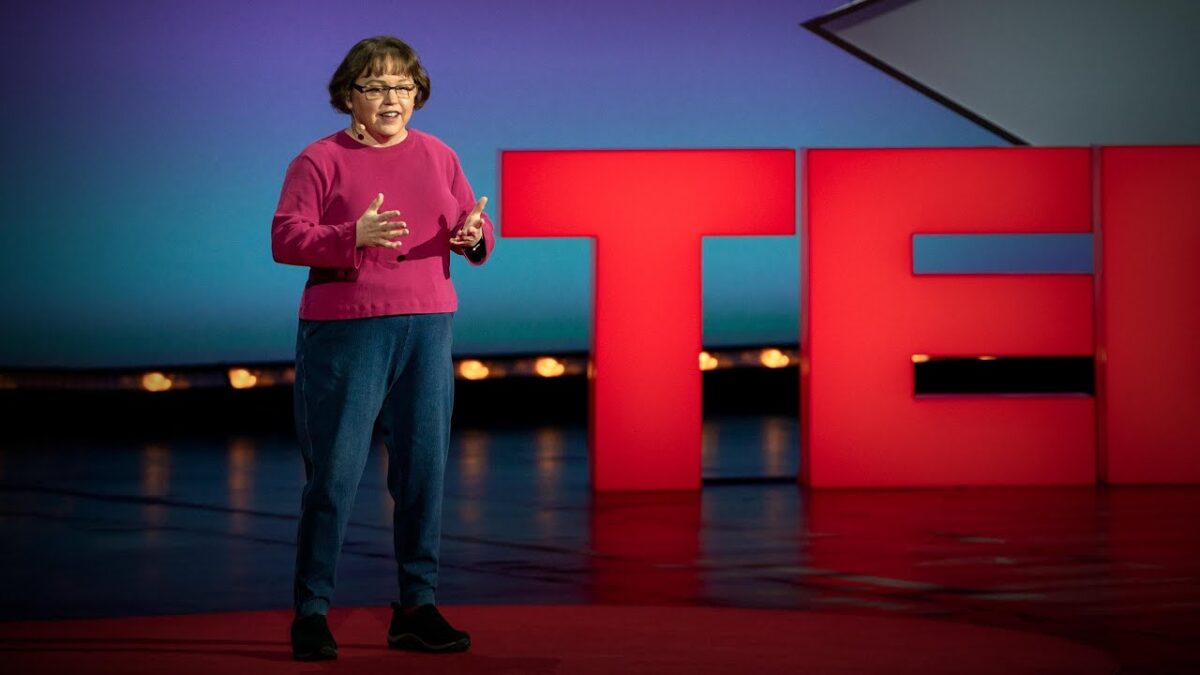
How technology has changed what it’s like to be deaf | Rebecca Knill

Visit http://TED.com to get our entire library of TED Talks, transcripts, translations, personalized Talk recommendations and more.

“Complete silence is very addictive,” says Rebecca Knill, a writer who has cochlear implants that enable her to hear. In this funny, insightful talk, she explores the evolution of assistive listening technology, the outdated way people still respond to deafness and how we can shift our cultural understanding of ability to build a more inclusive world. “Technology has come so far,” Knill says. “Our mindset just needs to catch up.”

The TED Talks channel features the best talks and performances from the TED Conference, where the world’s leading thinkers and doers give the talk of their lives in 18 minutes (or less). Look for talks on Technology, Entertainment and Design — plus science, business, global issues, the arts and more. You’re welcome to link to or embed these videos, forward them to others and share these ideas with people you know. For more information on using TED for commercial purposes (e.g. employee learning, in a film or online course), submit a Media Request here: http://media-requests.TED.com

Follow TED on Twitter: http://twitter.com/TEDTalks
Like TED on Facebook: http://facebook.com/TED

Subscribe to our channel: http://youtube.com/TED

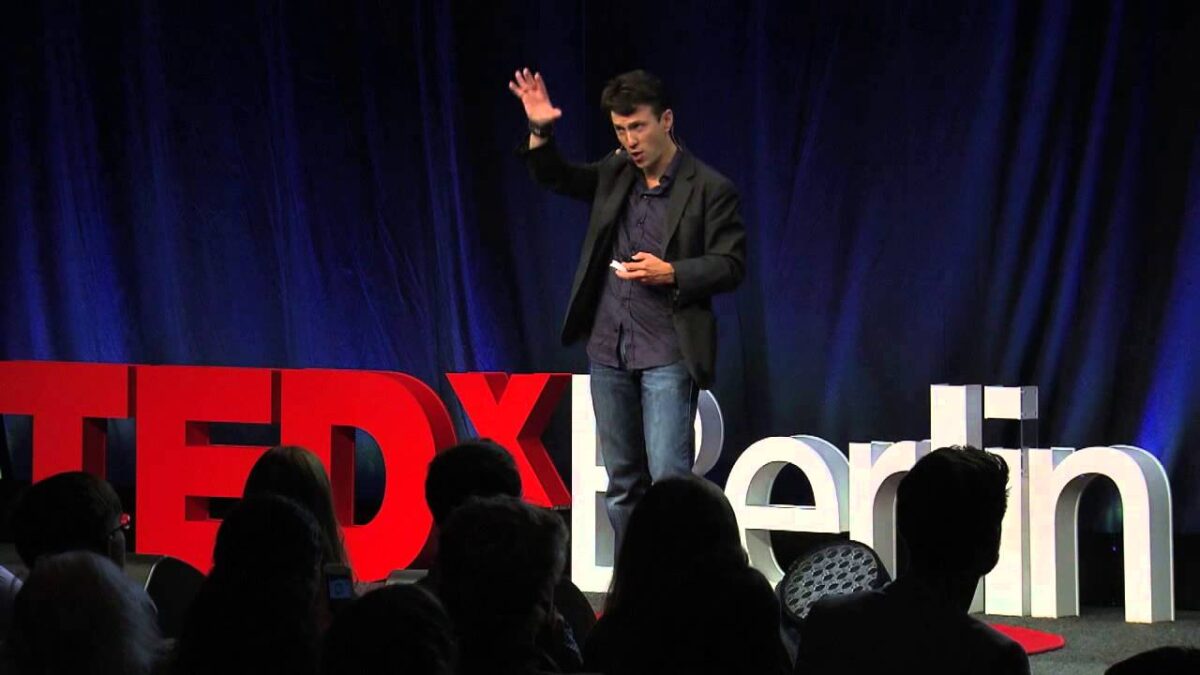
Next steps in health & medicine — where can technology take us? | Daniel Kraft | TEDxBerlin

This talk was given at a local TEDx event, produced independently of the TED Conferences. Daniel Kraft shows us where technology can take us in health and medicine. He pulls out countless gadgets of his jacket that will change the future of health-monitoring and improve our access to personal health care.

Daniel Kraft is Founding Executive Director and curator for Exponential Medicine, an annual program that brings together thought leaders from across technology and healthcare. He is a Stanford and Harvard trained physician-scientist, inventor, entrepreneur, and innovator. With over 20 years of experience in clinical practice, biomedical research and healthcare innovation, Kraft has chaired the Medicine Track for Singularity University since SU’s inception, and founded and is Executive Director of Exponential Medicine, a program that explores convergent, rapidly developing technologies and their potential in biomedicine and healthcare.

Following undergraduate degrees from Brown University and medical school at Stanford, Daniel was Board Certified in both Internal Medicine & Pediatrics after completing a Harvard residency at the Massachusetts General Hospital & Boston Children’s Hospital, and fellowships in hematology, oncology and bone marrow transplantation at Stanford.
He has multiple patents on medical device, immunology and stem cell related patents through faculty positions with Stanford University School of Medicine and as clinical faculty for the pediatric bone marrow transplantation service at University of California, San Francisco.

About TEDx, x = independently organized event In the spirit of ideas worth spreading, TEDx is a program of local, self-organized events that bring people together to share a TED-like experience. At a TEDx event, TEDTalks video and live speakers combine to spark deep discussion and connection in a small group. These local, self-organized events are branded TEDx, where x = independently organized TED event. The TED Conference provides general guidance for the TEDx program, but individual TEDx events are self-organized.* (*Subject to certain rules and regulations)

What happens when biology becomes technology? | Christina Agapakis

Visit http://TED.com to get our entire library of TED Talks, transcripts, translations, personalized talk recommendations and more.

“We’ve been promised a future of chrome — but what if the future is fleshy?” asks biological designer Christina Agapakis. In this awe-inspiring talk, Agapakis details her work in synthetic biology — a multidisciplinary area of research that pokes holes in the line between what’s natural and artificial — and shares how breaking down the boundaries between science, society, nature and technology can lead us to imagine different possible futures.

The TED Talks channel features the best talks and performances from the TED Conference, where the world’s leading thinkers and doers give the talk of their lives in 18 minutes (or less). Look for talks on Technology, Entertainment and Design — plus science, business, global issues, the arts and more. You’re welcome to link to or embed these videos, forward them to others and share these ideas with people you know. For more information on using TED for commercial purposes (e.g. employee learning, in a film or online course), submit a Media Request here: http://media-requests.TED.com

Follow TED on Twitter: http://twitter.com/TEDTalks
Like TED on Facebook: http://facebook.com/TED

Subscribe to our channel: http://youtube.com/TED

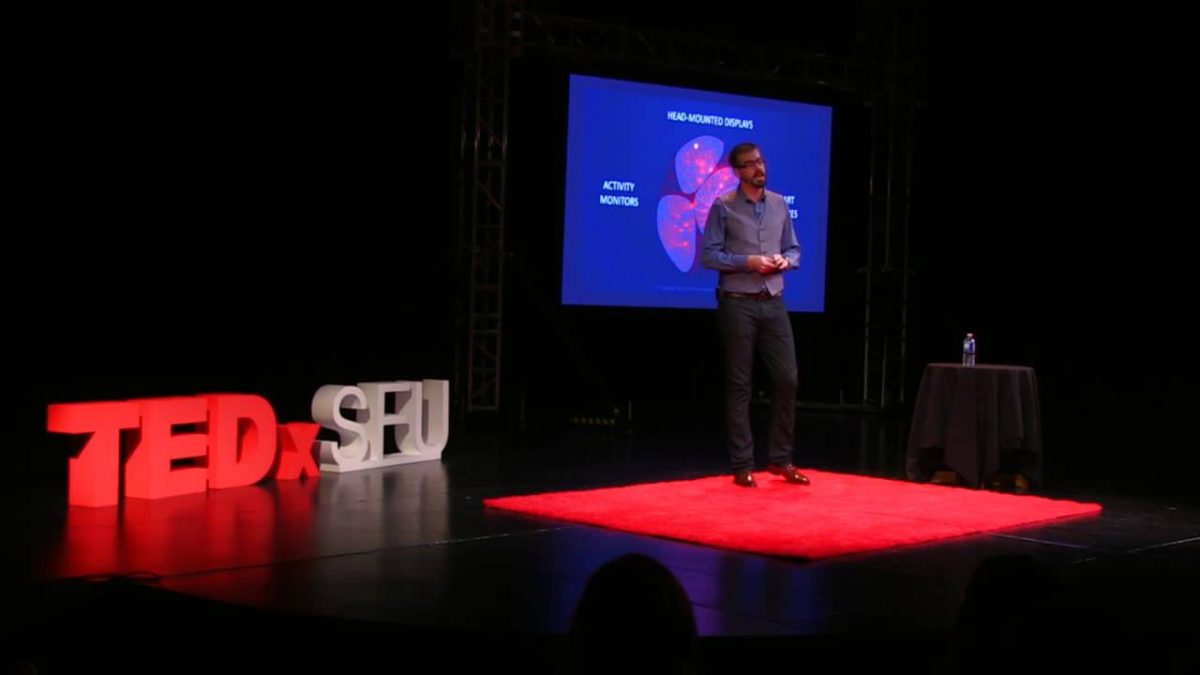
How wearable technology will change our lives | Gonzalo Tudela | TEDxSFU

This talk was given at a local TEDx event, produced independently of the TED Conferences. Gonzalo is the CEO & Co-Founder of Vandrico, a technology company that enables wearable technology in the workplace. Gonzalo believes that wearable technology is something that will change our lives in the present, and in the coming future.

Gonzalo is the CEO & Co-Founder of Vandrico, a technology company that enables wearable technology in the workplace. He holds a Bachelor in Business Administration and is current pursuing a Chartered Financial Analyst designation. With a passion for outdoor adventure, you might find him working in the mountains for a little added inspiration.

About TEDx, x = independently organized event In the spirit of ideas worth spreading, TEDx is a program of local, self-organized events that bring people together to share a TED-like experience. At a TEDx event, TEDTalks video and live speakers combine to spark deep discussion and connection in a small group. These local, self-organized events are branded TEDx, where x = independently organized TED event. The TED Conference provides general guidance for the TEDx program, but individual TEDx events are self-organized.* (*Subject to certain rules and regulations)