Primitive Technology: Mud mortar experiment and firing roof tiles

Mud mortar experiment and firing roof tiles
Subscribe: http://bit.ly/subPT | Never miss a video! Enable ‘ALL’ Notifications!
Watch my newest content: https://youtube.com/playlist?list=PLGnWLXjIDnpBR4xqf3FO-xFFwE-ucq4Fj&playnext=1&index=2

Follow Primitive Technology:
Wordpress: https://primitivetechnology.wordpress.com/
Patreon: https://patreon.com/user?u=2945881

Watch More Primitive Technology:
Newest Uploads: https://youtube.com/playlist?list=PLGnWLXjIDnpBR4xqf3FO-xFFwE-ucq4Fj&playnext=1&index=2
Pyrotechnology: https://youtube.com/playlist?list=PLGnWLXjIDnpBVRqu5lz5JGaQxjPs7q3CJ&playnext=1&index=2
Shelter: https://youtube.com/playlist?list=PLGnWLXjIDnpBBsdKZb-vy30o88SIxItp2&playnext=1&index=2
Weapons: https://youtube.com/playlist?list=PLGnWLXjIDnpA-XGDrrmVgBnSXx15i2Awp&playnext=1&index=2
Popular Videos: https://youtube.com/playlist?list=PLGnWLXjIDnpAb29Lrdki5BPjTpMon8zla&playnext=1&index=2

About This Video:
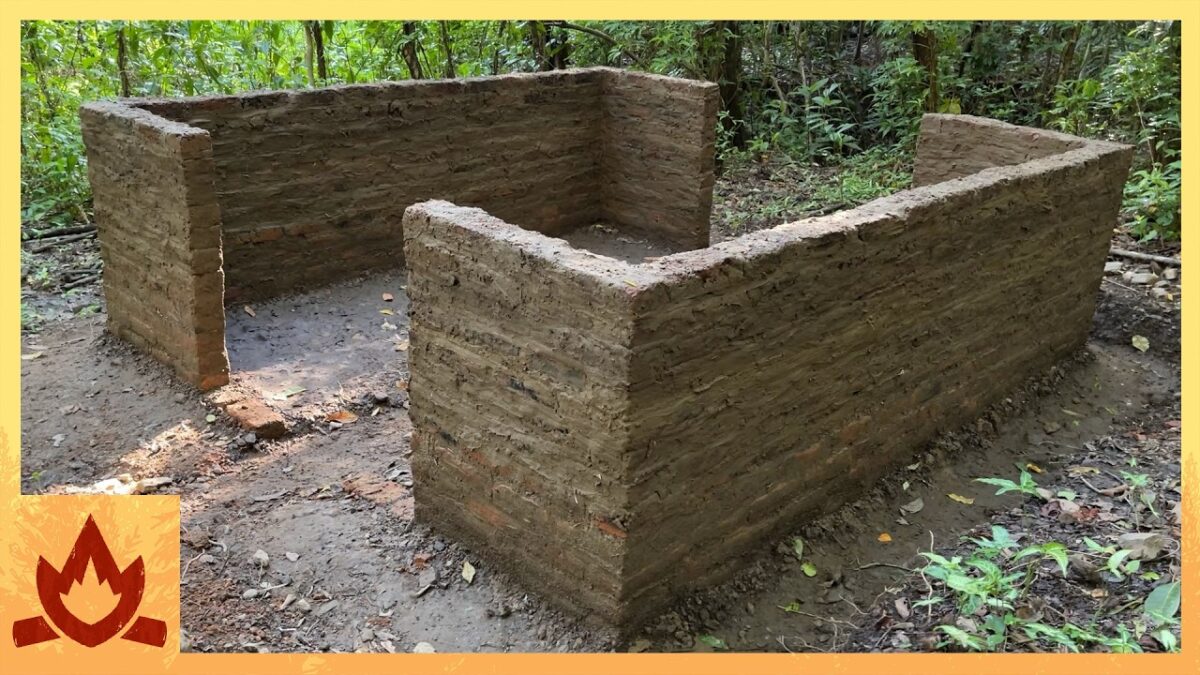
I tried building wall from fired bricks mortared together with mud rather than ash cement due to the mud being easier to produce, especially in the wet season when fire is difficult to produce. The wall initially survived heavy rain as it was being built but eventually collapsed near completion, likely to being built too fasts before the layers could dry. If I try again in future, I’ll wait a day between layers and only build in dry weather, though this experiment showed that this method will survive heavy rain up to over a meter in wall height.

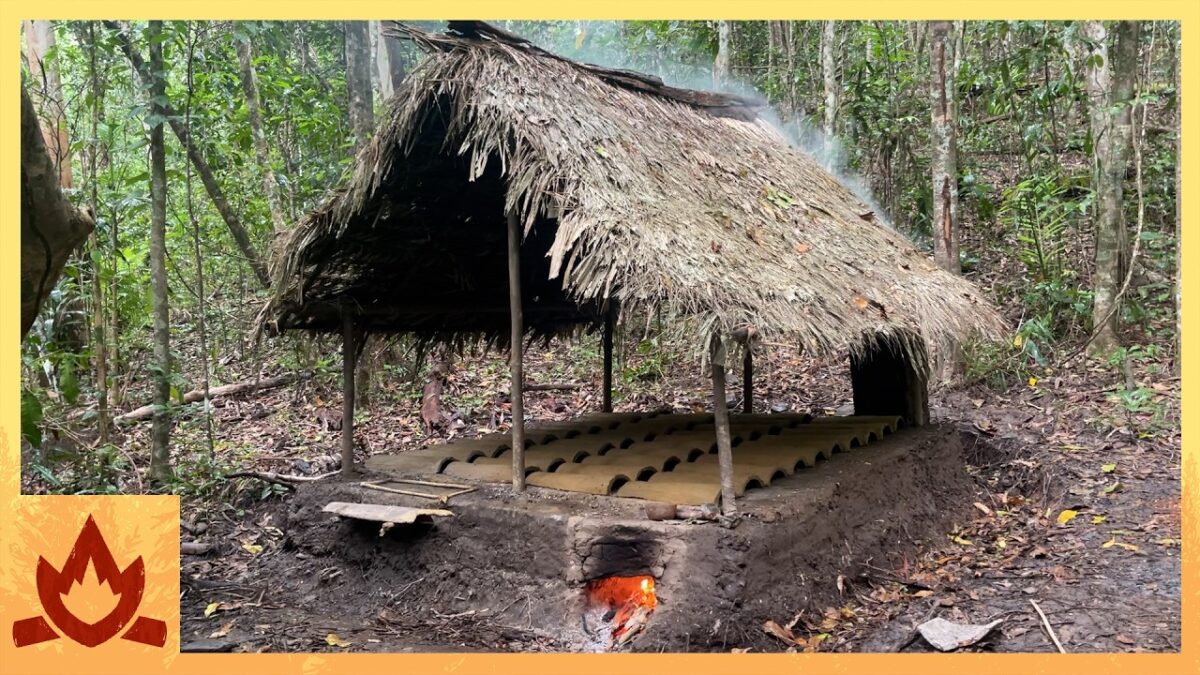
Next I continued on from the last video and successfully fired the roof tiles in the new kiln. The ash was pelletised to make ash cement for future use. Then I made a new batch of tiles and some bricks as well for the next firring. Hopefully the weather dries up soon so I can build a permanent workshop for the next wet season, I need another tiled hut (in addition to the current 2 walled tiled hut) that won’t rot in the wet weather like thatch does.

0:00 Mud mortar experiment
11:21 Drying roof tile/ making kiln
13:03 Firing roof tiles
19:13 Making next batch of tiles and bricks

About Primitive Technology:
Primitive technology is a hobby where you build things in the wild completely from scratch using no modern tools or materials. These are the strict rules: If you want a fire, use a fire stick – An axe, pick up a stone and shape it – A hut, build one from trees, mud, rocks etc. The challenge is seeing how far you can go without utilizing modern technology. I do not live in the wild, but enjoy building shelter, tools, and more, only utilizing natural materials. To find specific videos, visit my playlist tab for building videos focused on pyrotechnology, shelter, weapons, food & agriculture, tools & machines, and weaving & fiber.

#PrimitiveTechnology #1 #2
Primitive Technology: Wood ash & crushed terracotta mortar

Wood ash & crushed terracotta mortar
Subscribe: http://bit.ly/subPT | Never miss a video! Enable ‘ALL’ Notifications!
Watch my newest content: https://youtube.com/playlist?list=PLGnWLXjIDnpBR4xqf3FO-xFFwE-ucq4Fj&playnext=1&index=2

Follow Primitive Technology:
Wordpress: https://primitivetechnology.wordpress.com/
Patreon: https://patreon.com/user?u=2945881

Watch More Primitive Technology:
Newest Uploads: https://youtube.com/playlist?list=PLGnWLXjIDnpBR4xqf3FO-xFFwE-ucq4Fj&playnext=1&index=2
Pyrotechnology: https://youtube.com/playlist?list=PLGnWLXjIDnpBVRqu5lz5JGaQxjPs7q3CJ&playnext=1&index=2
Shelter: https://youtube.com/playlist?list=PLGnWLXjIDnpBBsdKZb-vy30o88SIxItp2&playnext=1&index=2
Weapons: https://youtube.com/playlist?list=PLGnWLXjIDnpA-XGDrrmVgBnSXx15i2Awp&playnext=1&index=2
Popular Videos: https://youtube.com/playlist?list=PLGnWLXjIDnpAb29Lrdki5BPjTpMon8zla&playnext=1&index=2

About This Video:
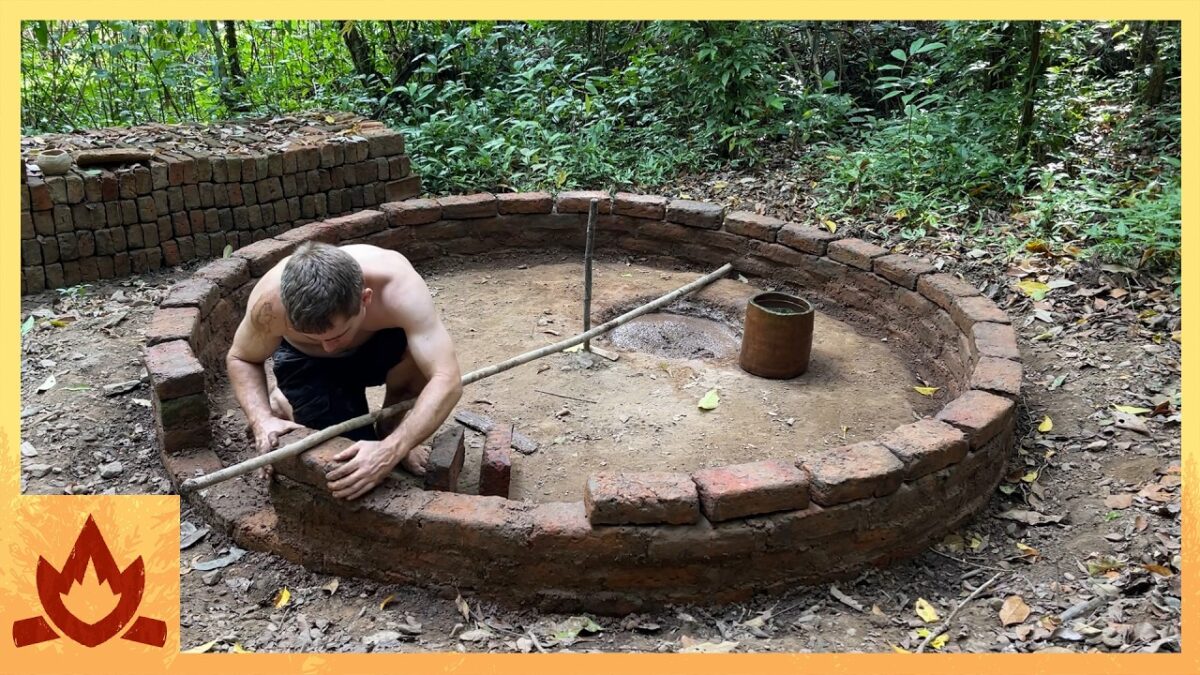
I made mortar from wood ash and crushed terracotta and then used it to mortar bricks together. The ash from previous brick firings was formed into pellets and re-fired in the kiln to calcine it. There is calcium in wood ash which behaves the same as limestone when burned so it will set after being wetted and allowed to dry. The aggregate was crushed terracotta from old broken bricks. These contributed alumina and silica which along with the sodium and silica from the ash form aluminosilicate chains, forming a geopolymer. It forms a noticeably stronger mortar than the previous on I made from wood ash and sand. Also the terracotta is easier to source than sand in this location. Mixing 1 part ash to 3 parts terracotta yielded a useable mortar. A sample was tested after 9 days of drying and did not dissolve in water. I’ll likely investigate easier ways to produce this material in future so I can build more structures with brick.

About Primitive Technology:
Primitive technology is a hobby where you build things in the wild completely from scratch using no modern tools or materials. These are the strict rules: If you want a fire, use a fire stick – An axe, pick up a stone and shape it – A hut, build one from trees, mud, rocks etc. The challenge is seeing how far you can go without utilizing modern technology. I do not live in the wild, but enjoy building shelter, tools, and more, only utilizing natural materials. To find specific videos, visit my playlist tab for building videos focused on pyrotechnology, shelter, weapons, food & agriculture, tools & machines, and weaving & fiber.

#PrimitiveTechnology #terracotta #wood

Primitive Technology: Hut with Underfloor Heating (Ondol/Hypocaust)

Hut with Underfloor Heating (Ondol/Hypocaust)
Subscribe: http://bit.ly/subPT | Never miss a video! Enable ‘ALL’ Notifications!
Watch my newest content: https://youtube.com/playlist?list=PLGnWLXjIDnpBR4xqf3FO-xFFwE-ucq4Fj&playnext=1&index=2

Follow Primitive Technology:
Wordpress: https://primitivetechnology.wordpress.com/
Patreon: https://patreon.com/user?u=2945881

Watch More Primitive Technology:
Newest Uploads: https://youtube.com/playlist?list=PLGnWLXjIDnpBR4xqf3FO-xFFwE-ucq4Fj&playnext=1&index=2
Pyrotechnology: https://youtube.com/playlist?list=PLGnWLXjIDnpBVRqu5lz5JGaQxjPs7q3CJ&playnext=1&index=2
Shelter: https://youtube.com/playlist?list=PLGnWLXjIDnpBBsdKZb-vy30o88SIxItp2&playnext=1&index=2
Weapons: https://youtube.com/playlist?list=PLGnWLXjIDnpA-XGDrrmVgBnSXx15i2Awp&playnext=1&index=2
Popular Videos: https://youtube.com/playlist?list=PLGnWLXjIDnpAb29Lrdki5BPjTpMon8zla&playnext=1&index=2

About This Video:
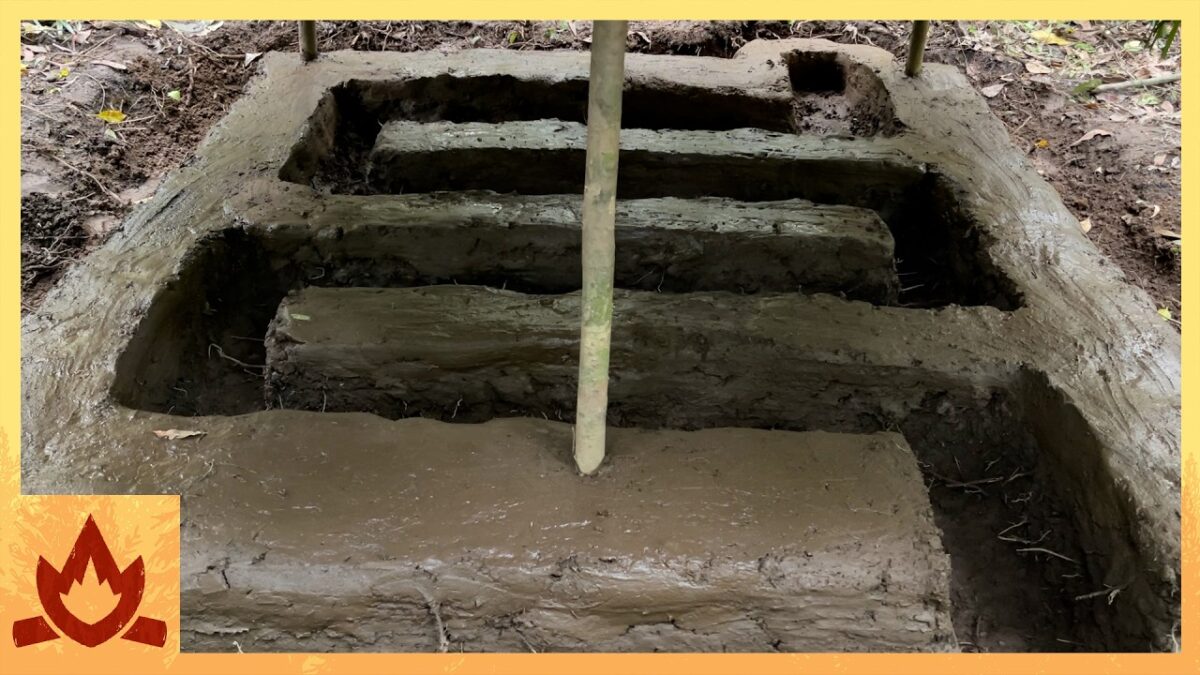
I built a thatched hut with an underfloor heating system for the purpose of drying bricks, tiles and pottery faster. I built my standard small 2 x 2 m hut design first to keep the rain off the work site. Then I dug 8 meters of trench, 25 cm wide and deep, zig-zagging through the floor of the hut, while building up the sides with mud made from the excavated soil. When the tunnels were finished, flat stones were laid over the trenches and covered with mud as well to form a flat floor. A fire was lit in the lower entrance of the tunnels and the system drew the smoke through weakly. This was enhanced by building a short chimney at the back. The floor will take time to dry out slowly without cracking. When it is dry, it will be used for drying tiles, bricks and pottery made from a nearby source of clay. This underfloor heating is similar to the Korean “Ondol” or Roman “Hypocaust”, both systems involving fire beneath a floor to provide warmth although it is more like the typical ondol with multiple tunnels whereas the hypocaust consists of tiles held up with pillars.

About Primitive Technology:
Primitive technology is a hobby where you build things in the wild completely from scratch using no modern tools or materials. These are the strict rules: If you want a fire, use a fire stick – An axe, pick up a stone and shape it – A hut, build one from trees, mud, rocks etc. The challenge is seeing how far you can go without utilizing modern technology. I do not live in the wild, but enjoy building shelter, tools, and more, only utilizing natural materials. To find specific videos, visit my playlist tab for building videos focused on pyrotechnology, shelter, weapons, food & agriculture, tools & machines, and weaving & fiber.

#PrimitiveTechnology #hut #underground

Primitive Technology: Roof tiles dried by underfloor heating

Roof tiles dried by underfloor heating
Subscribe: http://bit.ly/subPT | Never miss a video! Enable ‘ALL’ Notifications!
Watch my newest content: https://youtube.com/playlist?list=PLGnWLXjIDnpBR4xqf3FO-xFFwE-ucq4Fj&playnext=1&index=2

Follow Primitive Technology:
Wordpress: https://primitivetechnology.wordpress.com/
Patreon: https://patreon.com/user?u=2945881

Watch More Primitive Technology:
Newest Uploads: https://youtube.com/playlist?list=PLGnWLXjIDnpBR4xqf3FO-xFFwE-ucq4Fj&playnext=1&index=2
Pyrotechnology: https://youtube.com/playlist?list=PLGnWLXjIDnpBVRqu5lz5JGaQxjPs7q3CJ&playnext=1&index=2
Shelter: https://youtube.com/playlist?list=PLGnWLXjIDnpBBsdKZb-vy30o88SIxItp2&playnext=1&index=2
Weapons: https://youtube.com/playlist?list=PLGnWLXjIDnpA-XGDrrmVgBnSXx15i2Awp&playnext=1&index=2
Popular Videos: https://youtube.com/playlist?list=PLGnWLXjIDnpAb29Lrdki5BPjTpMon8zla&playnext=1&index=2

About This Video:
I made a batch of tiles to test the underfloor heating in the new hut. A new chimney was made from bricks and the floor of the hut was given a new layer of mud. A roof tile mold and form were carved and a batch of 40 roof tiles were made using them. Despite wet weather, the new hut was able to keep the tiles out of the rain and actively dry them with the heat from the floor.

About Primitive Technology:
Primitive technology is a hobby where you build things in the wild completely from scratch using no modern tools or materials. These are the strict rules: If you want a fire, use a fire stick – An axe, pick up a stone and shape it – A hut, build one from trees, mud, rocks etc. The challenge is seeing how far you can go without utilizing modern technology. I do not live in the wild, but enjoy building shelter, tools, and more, only utilizing natural materials. To find specific videos, visit my playlist tab for building videos focused on pyrotechnology, shelter, weapons, food & agriculture, tools & machines, and weaving & fiber.

#PrimitiveTechnology #hut #shelter

Primitive Technology: Yam, cultivate and cook

Primitive Technology: Yam, cultivate and cook
Subscribe: http://bit.ly/subPT | Never miss a video! Enable ‘ALL’ Notifications!
More videos, watch me build a natural Blower & Charcol next: http://bit.ly/2MuwEr5

Follow Primitive Technology:
Wordpress: https://primitivetechnology.wordpress.com/
Patreon: https://patreon.com/user?u=2945881

Watch More Primitive Technology:
Latest Uploads: https://youtube.com/playlist?list=PLGnWLXjIDnpBR4xqf3FO-xFFwE-ucq4Fj
Pyrotechnology: https://youtube.com/playlist?list=PLGnWLXjIDnpBVRqu5lz5JGaQxjPs7q3CJ
Shelter: https://youtube.com/playlist?list=PLGnWLXjIDnpBBsdKZb-vy30o88SIxItp2
Weapons: https://youtube.com/playlist?list=PLGnWLXjIDnpA-XGDrrmVgBnSXx15i2Awp
Popular Videos: https://youtube.com/playlist?list=PLGnWLXjIDnpAb29Lrdki5BPjTpMon8zla

About This Video:
I planted a yam in a large basket like enclosure and then 6 months later harvested, cooked and ate it. My previous attempts at growing yams were stymied by wild pigs and scrub turkeys. On learning that yams are in the area, these animals will seek out any tubers planted and eat them. So my solution was to build a large basket like enclosure to protect the growing vine. 13 wooden stakes were hammered into the ground (an odd number being important in any weaving project) and lawyer cane harvested from the forest was woven between these uprights. The basket was about 1 m in diameter and about 75 cm high.
A large yam, partially eaten by wallabies from a location further down the creek, was dug up and carried to the site. A small pit was dug in the enclosure and the yam simply placed in it. The enclosure was then back filled with dead leaves for fertiliser. As time progressed the vine grew above the basket and a long pole attached to it so it could climb into the canopy making full use of the sun.
After 6 months and no maintenance, weeding or watering the yam had grown into two large tubers whereas the original yam had rotted away leaving a thin husk. The new tubers were dug up using a digging stick. As carful as I was, the yams sill broke off with more tuber still under ground. This portion will probably strike next season anyway. In the canopy, the vine also produced smaller tubbers called “bulbils”. These were collected in a pot to be used as seed yams for a larger garden I’m planning. You can eat bulbils as well but the larger yam is generally eaten instead due to its larger size.
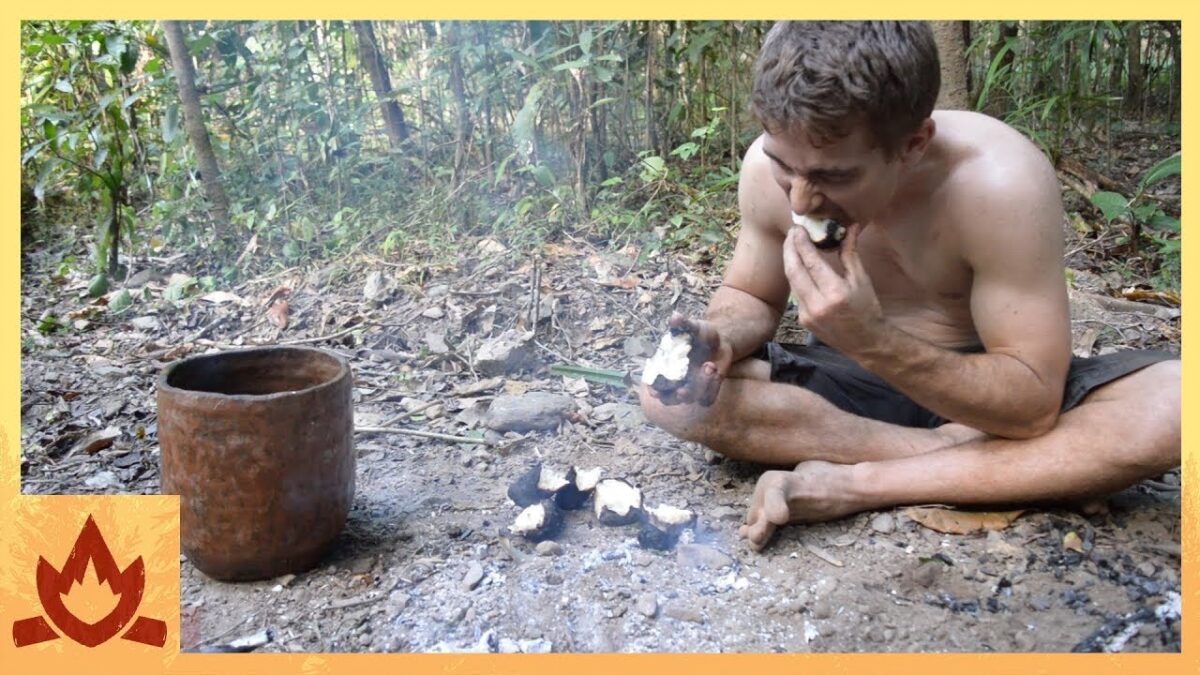
To cook the yam a fire pit was dug about 30 cm in diameter and about 20 cm deep. Wood was piled above the pit and set alight. The hot coals then fell into the pit where rocks where added to retain heat. The coals were scraped aside and the large tuber was broken up and thrown on top. The coals were raked back over it and a fire started on top. This cooked for 30 minutes before being pulled out of the coals. The outer layer of the yam was charred black and burning but the inside was soft and well cooked. The yam was eaten while steaming hot and tasted similar to a potato but with a crunchier texture near the outside much like bread crust. Although bland, yams provide a good deal of carbohydrates and are eaten as a staple in certain cultures. The remaining large yam tuber was tied up in a tree where rats could not eat it (hopefully).
This form of farming is a good way to get around the conventional farming practice of clearing trees to make fields. Instead the yam vine uses the trees as scaffolding to climb on, allowing it to reach the light in the forest canopy. The basket enclosure worked well to keep forest creatures from eating the investment. It also formed a good in-situ compost heap to nourish the yam as it grew. In future, I’d add sand to the mix as yams tend to do well in sandy soil and I expect it would be easier to dig up. Yams do well in dry conditions but will yield more if well-watered so digging a water retaining pit might help. Despite the large size of the yams I grew relative to ordinary potatoes, much larger ones are possible and are indeed routinely grown. The largest one from my research was 275 kg, grown in India. Yams have 116 calories per 100 grams compared to potatoes at only 93. They store well in the dry season as they are adapted to having a dormant period during these conditions. They are versatile in that they can be cooked into chips, roasted, boiled, mashed and made into a type of dough called “fu fu” typically eaten with stews.

Primitive Technology: Wood Ash Cement

Primitive Technology: Wood Ash Cement – Creating wood ash cement from scratch
Subscribe: http://bit.ly/subPT | Never miss a video! Enable ‘ALL’ Notifications!
More videos, watch me cultivate and cook yams from scratch: http://bit.ly/2L5HmqY

Follow Primitive Technology:
Wordpress: https://primitivetechnology.wordpress.com/
Patreon: https://patreon.com/user?u=2945881

Watch More Primitive Technology:
Latest Uploads: https://youtube.com/playlist?list=PLGnWLXjIDnpBR4xqf3FO-xFFwE-ucq4Fj
Pyrotechnology: https://youtube.com/playlist?list=PLGnWLXjIDnpBVRqu5lz5JGaQxjPs7q3CJ
Shelter: https://youtube.com/playlist?list=PLGnWLXjIDnpBBsdKZb-vy30o88SIxItp2
Weapons: https://youtube.com/playlist?list=PLGnWLXjIDnpA-XGDrrmVgBnSXx15i2Awp
Popular Videos: https://youtube.com/playlist?list=PLGnWLXjIDnpAb29Lrdki5BPjTpMon8zla

Partial credit for this idea goes to James Keane who I discussed this with on my wordpress site (see conversation): https://primitivetechnology.wordpress.com/2018/03/06/lime/#comment-9736
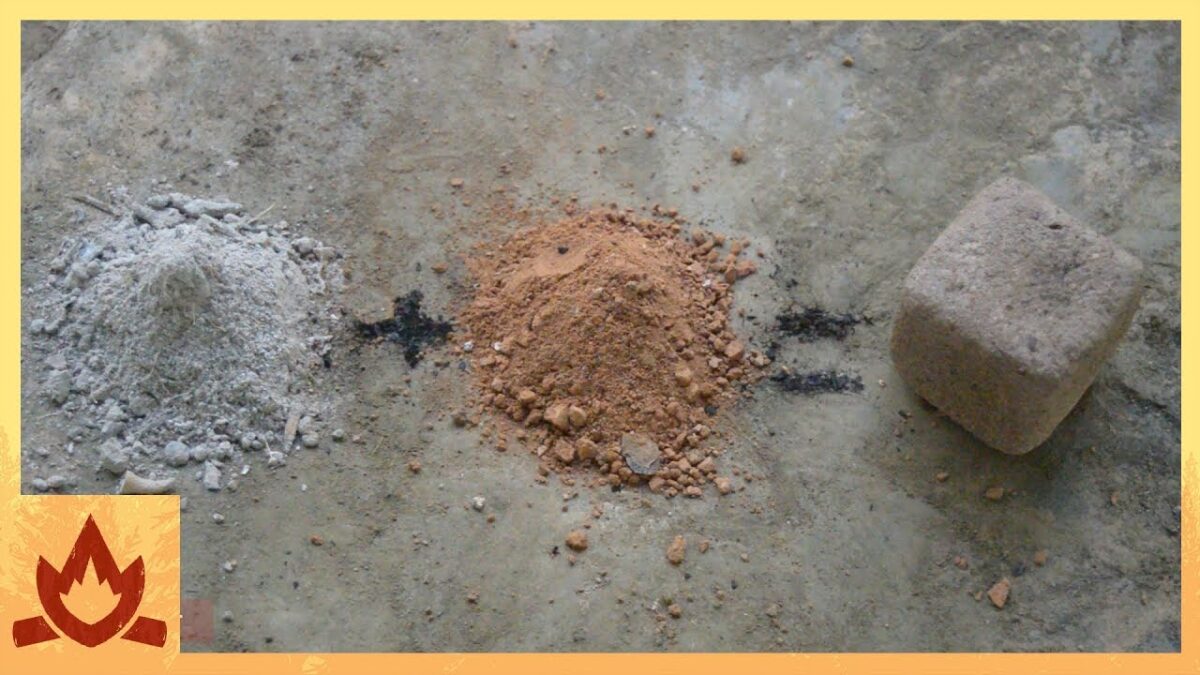
I developed an experimental cement from made only from re-fired wood ash as its cementitious material. It was mixed with crushed terracotta as an aggregate and formed into a cube. The cement set hard after 3 days and did not dissolve in water after this period.
Process: First I burnt bark and leaves in a kiln at high temperatures to produce well burnt, mostly white wood ash. The ash was then mixed into water and stirred well. The excess water was poured off and the resulting paste was made into pellets and allowed to dry. A pellet was then re-heated in the forge until it glowed about orange hot. This was then taken out, cooled and dropped in a pot of water. The pellet dissolved and boiled due to a chemical reaction with the water. The paste was stirred and crushed terracotta (old tiles from previous projects) was added and mixed to form a mouldable mortar. This was formed into a cube and allowed to set for three days (in the video, a cube made exactly the same way 3 days previously was used due to time constraints). The resultant cube was strong and made a slight ringing sound when tapped with a finger nail. It was placed in water for 24 hours to simulate a very heavy rain event and did not dissolve or release residues into the water.
My current theory: The main component of wood ash consists of calcium in some form (e.g. calcium carbonate, calcium oxide). This can be up to 45% from my research. Calcium is in higher concentration in the bark and leaves of a tree. When the ash is mixed with water, the soluble component of wood ash (10% pot ash) dissolves into the water. But seeing that it does nothing for the cementing process, it is drained off leaving the insoluble calcium (and other components) in the paste. Doing this probably raises the relative percentage of calcium in the paste to about 50% or more. Most of the other 50 % consists of silica and alumina which are pozzolans, materials that chemically react with calcium hydroxide to increase the durability of the cement product. The paste was then made into a pellet and fired again to high temperature to convert all the calcium compounds to calcium oxide. It also reduces any charcoal in the pellet to ash if it hadn’t already been burnt the first time. This step seemed important as un-fired ash pellets only partially hardened and would fall apart in water, though retaining a weak undissolved 5mm thick crust. I can only surmise that re-firing the ash just gave a greater conversion of the calcium components to calcium oxide. The pellet is slaked in water converting the calcium oxide to calcium hydroxide. This cement was mixed with crushed terracotta which may also help in some way that I’m not aware of as I only did this one experiment and did not test other aggregates yet (e.g. sand, gravel etc.). Terracotta is porous and might hold together better than other materials. The mixture is allowed to set in air where carbon dioxide reacts with calcium hydroxide to form calcium carbonate cementing the aggregate together. After this, the cement will not dissolve in water.
Use: I think this material might have a potential use as a mortar holding rocks or bricks together in wet environments where limestone or snail shells are unavailable for making cement. Wood ash is a pretty ubiquitous material to most natural environments inhabited by people using biomass fuels. Wood ash cement turns a waste product into a valuable building material. From my research, wood ash is already being used as a partial replacement for cement in the building industry without decreases in strength of the final product. But I’ve only just started experimenting with it and don’t know its full capabilities and limitations. Calcium content of wood ash differs depending on the species of tree, the part of the tree burnt and the soil it’s grown on. Cautious experimentation is still required before committing to a hut built from this material.