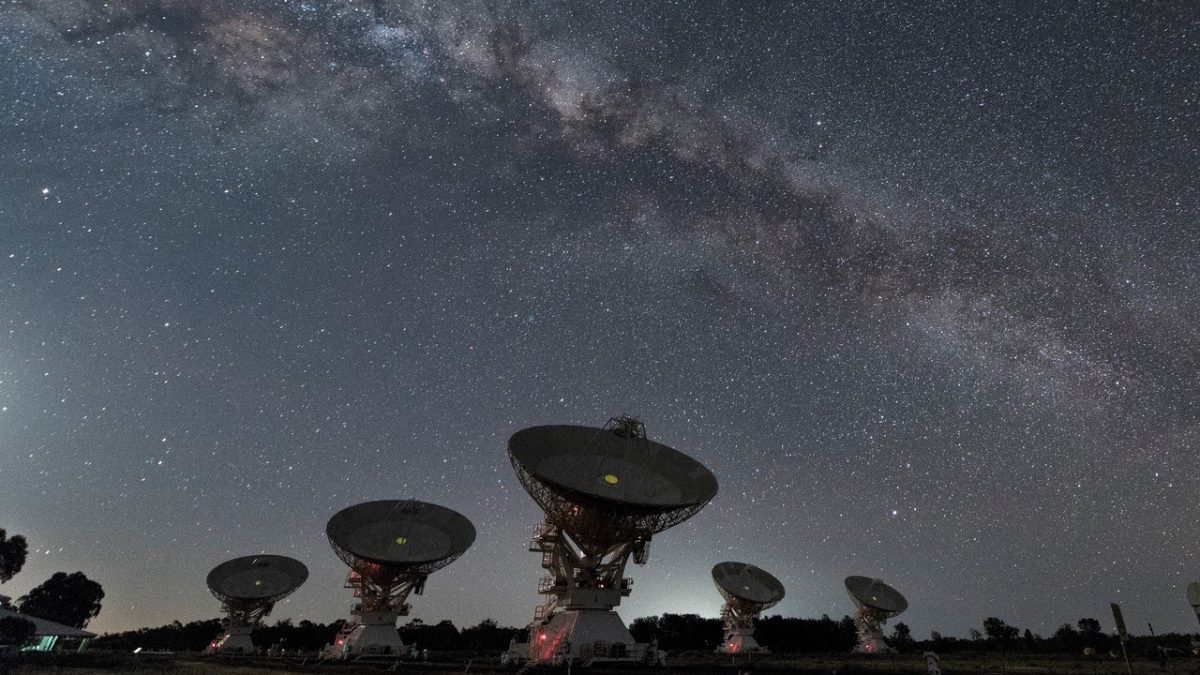
New laser technology could photograph galaxies 75,000 years away

We could soon be able to take photographs of stars 75,000 years away after new technology was configured to speed the up the process using lasers, according to ANU astrophysicist and cosmologist Dr Brad Tucker.

“The fact that we’ve never even seen anything else besides a few planets in our own solar system up close is the exciting thing,” he told Sky News.

“At the current technology right now, it takes 75,000 years to get to the nearest star system but now with this idea of using a huge array of lasers to shoot at a sail and then blast that sail off into space we think that we could reach the next star in a couple of decades.”

Dr Tucker said the technology was “not that far off being achievable” because it uses technology which have already been developed such as lasers and light sails.

“If you can get to the next star system, we can take up-close photos of the star and the planets around it in a way that we just never even considered being an option.”


Infectious Diseases Specialist: COVID-19 vaccine technology is ‘like a piece of cake’

Infectious Diseases Specialist Dr Sanjaya Senanayake says the technology behind COVID-19 vaccines is “like a piece of cake”; and, having baked a cake, before he is “eminently qualified” to make this analogy.

It comes after Margaret Keenan became the first person to receive the Pfizer vaccine in the UK, kicking off the government’s plans for a mass roll-out of the vaccine.

Woodside had an ‘early embrace of technology’

At oil and gas giant, Woodside, early investment in tech would prove to be “a lifesaver” when COVID-19 hit according to Sky News Business Editor Ticky Fullerton.

Ms Fullerton said at Woodside, the “internet of things” was well embedded as every employee already had their own laptop.

“We’d kinda been practising with this, but it was within the confines of the office,” Woodside CEO Peter Coleman told Sky News.

“Now if you think about then, our communications system that we used, our virtual meeting space and so forth, went from less than 200 meetings per day on that, and that’s probably being generous, to more than two and a half thousand meeting per day, in a period of five days.

“So, the system ramped up really, really quickly.”

“Woodside’s early embrace of technology was no accident,” Ms Fullerton said.

Woodside was also the first commercial business in Australia to join IBM’s Q Network in quantum research.

“It’s an important relationship for us,” Mr Coleman said.

“And it’s obviously a testament to the relationships that we’ve built with IBM over the past few years”.

“And the trust Woodside has in IBM and vice versa”.