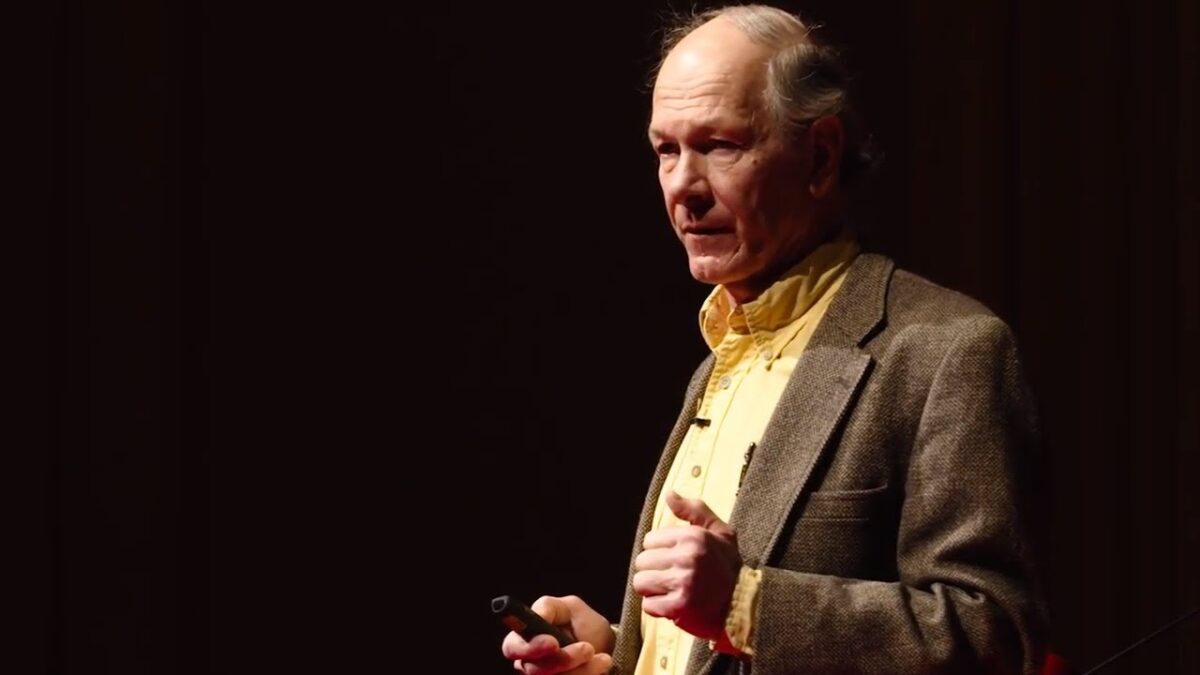
For the last half millennium, scientific curiosity has driven a series of technological revolutions that powers today’s economy and dominates our way of life. About 500 years ago, studies of the motions of the planets and Moon led to mechanics. Mechanics led to the Industrial Revolution. Investigation of electricity, magnetism, and atoms led to the electrification of the planet, computers, cell phones, and a host of modern gadgets. Science now dominates the human experience. Where will today’s discoveries take us in the future? John did his undergraduate studies at the University of California Berkeley and earned his PhD at the University of Massachusetts in 1980. He was a researcher at AT&T Bell Laboratories between 1980 and 1991. He then joined the faculty of the University of Colorado Boulder. He studies the interstellar medium, the formation of stars and planets, and the cosmic cycling and evolution of matter. He is interested in fundamental physics and cosmology. He is an avid skier. This talk was given at a TEDx event using the TED conference format but independently organized by a local community. Learn more at https://www.ted.com/tedx
Tag: astronomy
Is ‘Oumuamua Alien Technology?
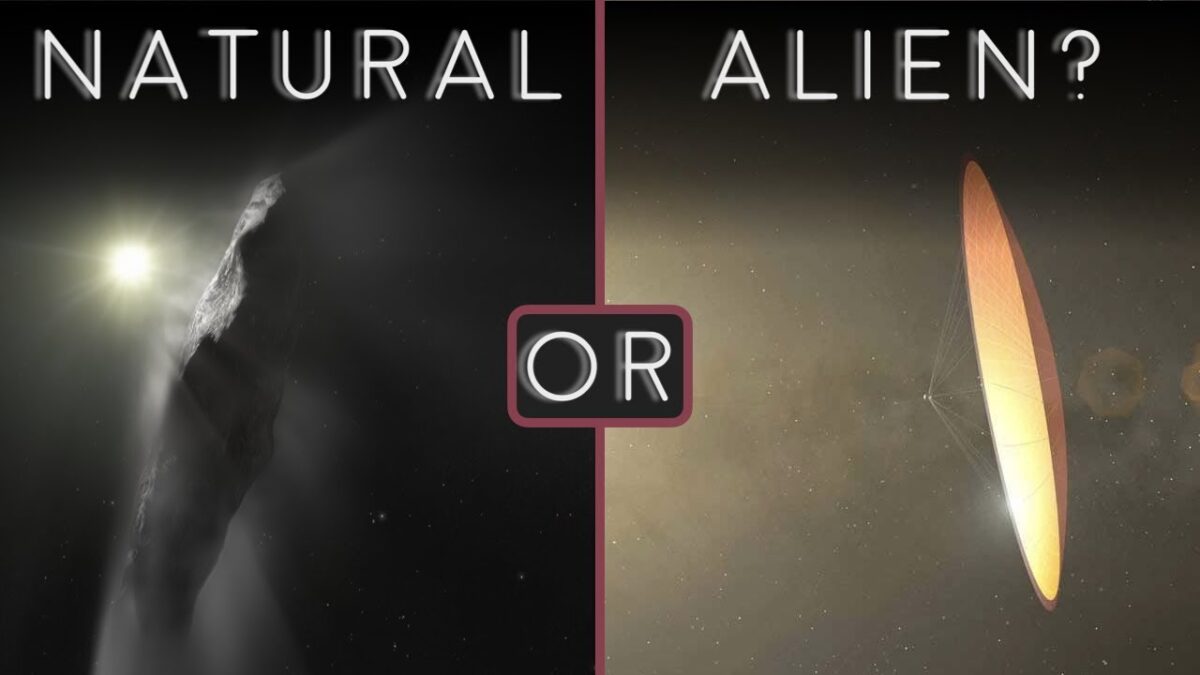
Three years ago, we detected the first interstellar object passing through the Solar System, `Oumuamua. Ever since, astronomers have been debating the origins of this strange body. Whilst many hypothesize an asteroid, the media is ablaze with the possibility that it could be alien technology. Join us today for a discussion of this theory and the counter-arguments proposed. Written & presented by Prof David Kipping. Thanks to Dr Sean Raymond for fact checking – check out his blog www.planetplanet.net and astro poetry book https://www.amazon.com/dp/B08LFZZWGZ
You can now support our research program and the Cool Worlds Lab at Columbia University: https://www.coolworldslab.com/support
Get Stash here! https://teespring.com/stores/cool-worlds-store
Thank-you to our supporters K. Clark, T. Widdowson, D. Smith, S. Hackley, M. Sloan, L. Sanborn, K. Kantor, P. Herman, C. Bottaccini, D. Brunk, D. Daughaday, S. Fincher, J. Kindred, A. Jones, J. Allen, S. Baldwin, J. Black, S. Brownlee, D. Denholm, T. Dorais, G. Downton, E. Urrestarazu, G. Fulton, S. Griffiths, P. Halloran, J. Jurcevic, N. Kildal, J. Kobernick, W. Kobernick, V. Kremer, M. Lijoi, S. Loftin, B. Loizides, A. Maslyanchuk, B. Matson, O. Mcintyre, L. Mitchell, A. Pelletier, J. Rivillas, B. Robinson, Z. Star, L. Steely, E. Stefan-Matyus, M. Steven, E. West, B. York, T. Zanjonc, P. Gowd, S. Kelsey, P. Kommareddy, C. Wolfred, D. Vennel, E. Dessoi, F. Naeem, F. Rebolledo, H. Laging, J. Falls, P. Rutherford, T. Leger, L. Skov, D. Roberts, E. Wilson, I. Baskerville, J. Bassnett, J. Shackleford, I. Johnstone, G. Suter, I. Hopcraft, J. Valdes, P. Akrill-Misso, W. Robertson, E. Orman, G. Ingham, D. Van Hecke, J. Pilloff, T. Bernhard. D. Dianovszki, E. Cook, S. Mass, T. Richards, T. Lancaster, C. Stouffer, G. Benson, A. de Vaal, C. Diamantis, J. Wenzel, M. Elliot, M. Wallstab, S. Bialek, B. Thomson, B. Daniluk, B. Bowen, D. Jacobson, D. Lukens, G. Coogan, J. Bushong, M. Wacinski, M. O’Donnell, M. Forbes, S. Vystoropskyi, S. Carr, T. Laird, S. Lee, T. Tschopp W. van den Wollenberg, Z. Danielson, Z. Turner, E. Fernandes, E. Vinci, L. Holc, S. Grant, S. Seyer, J. Patrick-Saunders, P. Conroy, R. Clifton, C. Butler, M. Peraic, N. Cordova, P. Inkpen &
K. Uyemura.
::References::
► Loeb, A., 2018, “Six Strange Facts About`Oumuamua”, Scientific American: https://arxiv.org/abs/1811.08832
► The ‘Oumuamua ISSI Team, 2019, “The Natural History of ‘Oumuamua”, Nature Astronomy, 3, 594: https://arxiv.org/abs/1907.01910
► Bialy, S. & Loeb, A., 2018, “Could Solar Radiation Pressure Explain ‘Oumuamua’s Peculiar Acceleration?”, ApJ, 868, 1: https://arxiv.org/abs/1810.11490
► Siraj, A. & Loeb, A., 2019, “‘Oumuamua’s Geometry Could Be More Extreme than Previously Inferred”, RNAAS, 3, 15: https://iopscience.iop.org/article/10.3847/2515-5172/aafe7c
► Zhang, Y. & Lin, D., 2020, “Tidal fragmentation as the origin of 1I/2017 U1 (‘Oumuamua)”, Nature Astronomy, 4, 852: https://www.nature.com/articles/s41550-020-1065-8
► Engelhardt, T. et al., 2017, “An Observational Upper Limit on the Interstellar Number Density of Asteroids and Comets”, AJ, 153, 133: https://arxiv.org/abs/1702.02237
► Meech, K., et al., 2017, “A brief visit from a red and extremely elongated interstellar asteroid”, Nature, 552, 378
::Clips used::
See shorturl.at/glFLR
::Music::
Music used is licensed by SoundStripe.com (SS) [shorturl.at/ptBHI], or via Creative Commons (CC) Attribution License (https://creativecommons.org/licenses/by/4.0/), or with permission from the artist.
► “My Unbelief” by Hill licensed via SS
► “Cylinder Two” and “Cylinder Four” by Chris Zabriskie licensed under a CC Attribution license: http://chriszabriskie.com/cylinders/
► “Painted Deserts” by Shimmer licensed via SS
► “Cylinder Five” by Chris Zabriskie licensed under a CC Attribution license: http://chriszabriskie.com/cylinders/
► “Stories About The World That Once Was” and “We Were Never Meant to Live Here” by Chris Zabriskie licensed under a CC Attribution license: http://chriszabriskie.com/neptuneflux/
► “Y” by Joachim Heinrich licensed under a CC Attribution license: https://joachimheinrich.bandcamp.com
► “Human Nature” by Hill, used with permission from the artist: https://hillmusic.bandcamp.com/album/shade-upon-thy-right-hand
► “Trace Correction” by Indive licensed under a CC Attribution license: https://indive.bandcamp.com
0:00 Six Strange Facts
6:27 Fact 1
8:19 Fact 2
10:35 Fact 3
12:10 Fact 4
16:31 Fact 5
17:19 Fact 6
19:43 Conclusion
#Oumuamua #IsOumuamuaAlien #CoolWorlds
Ancient Advanced Technology And Free Energy…(Secrets of the Past)
https://youtube.com/watch?v=TSz6qIcst9A
Researchers and scientists around the world are slowly starting to understand the source code of ancient technology. How and why were our ancient ancestors utilizing resonating frequencies, magnetism and creating free energy from natural sources? Researcher Michael Tellinger reveals some of his fascinating discoveries.
Presented by Michael Tellinger
Filmed by Contact in the Desert
This channel is managed by Zohar Entertainment Group UK, Zohar Entertainment Group International Inc, USA and AdRev, USA.
StarTalk Podcast: Technology and Us, with Ainissa Ramirez and Neil deGrasse Tyson
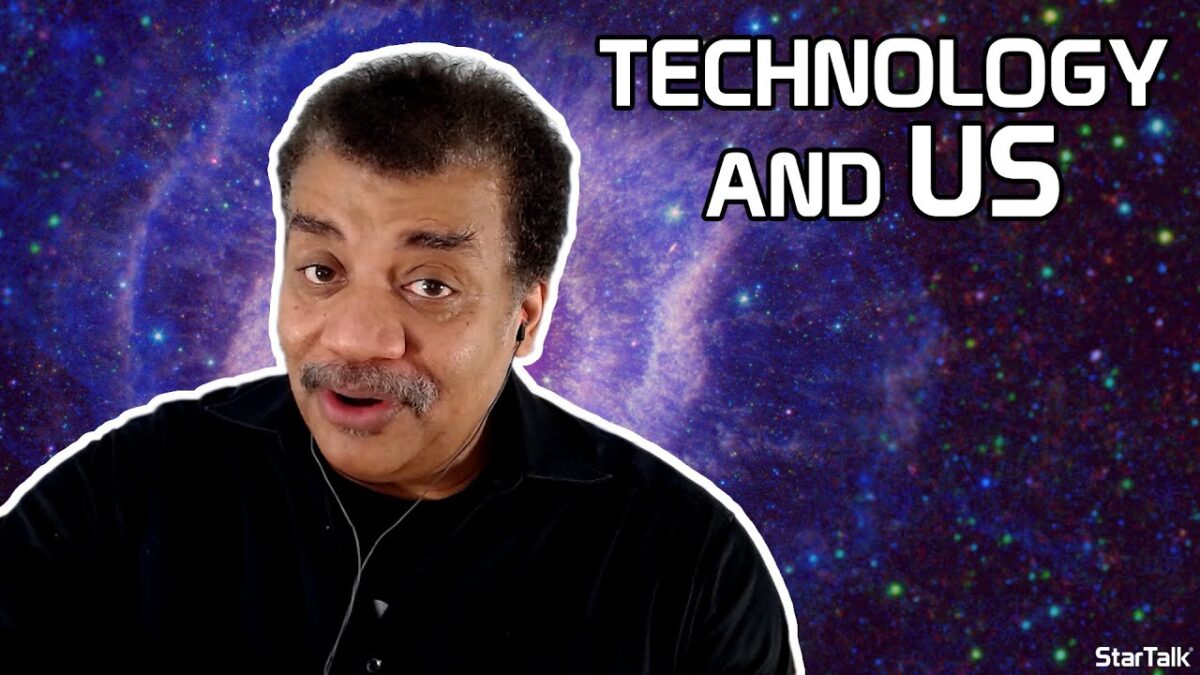
Do we control technology or does technology control us? On this episode of StarTalk Radio, Neil deGrasse Tyson joins forces with first-time comic co-host Negin Farsad and material scientist and engineer Ainissa Ramirez, PhD, to explore how technology has shaped the world as we know it. Ainissa is also the author of a new book The Alchemy of Us: How Humans and Matter Transformed One Another.
Why do we have a love/hate relationship with technology? Negin tells us why she thinks she was born in the wrong era. We discuss the rise of the printing press and our trio nerds out on calligraphy and quill pens. Then, we answer fan-submitted Cosmic Queries on how technology has impacted our lives. Ainissa tells us why we’re losing our ability to empathize. Has tech changed our biology? You’ll learn how the internet is re-wiring your brain. We explore how the internet has changed our memories from remembering what the information was to where the information is stored.
We debate which piece of technology has advanced us the furthest. Ainissa lobbies for steel, Negin gives her thoughts on the printing press, and Neil keeps it simple with the wheel and axle. Then we wonder – how much of technology is reversable? We reminisce on the outcry when Google Glass first launched. Discover more about innovations originally intended for space that have been successfully commercialized in our society.
We dive into the socioeconomics of technology: will there be a day when technology divides us even more? Are we mature enough to use technology? Is tech more suspectable to conspiracy thinking? Lastly, we discuss which technology worries us the most, why young people don’t get overwhelmed by technology, and how anti-tech and anti-science movements can slow progress. All that, plus, we ponder how to make sure technology is beneficial to all humankind.
Support us on Patreon: https://www.patreon.com/startalkradio
Subscribe to StarTalk: https://www.youtube.com/user/startalkradio?sub_confirmation=1
Follow StarTalk:
Twitter: http://twitter.com/startalkradio
Facebook: https://www.facebook.com/StarTalk
Instagram: https://www.instagram.com/startalkradio/
About the prints that flank Neil in this video:
“Black Swan” & “White Swan” limited edition serigraph prints by Coast Salish artist Jane Kwatleematt Marston. For more information about this artist and her work, visit Inuit Gallery of Vancouver https://inuit.com/.
About StarTalk:
Science meets pop culture on StarTalk! Astrophysicist & Hayden Planetarium director Neil deGrasse Tyson, his comic co-hosts, guest celebrities & scientists discuss astronomy, physics, and everything else about life in the universe. Keep Looking Up!
#StarTalk #NeildeGrasseTyson