
Technology in Average Japanese Homes

This a Japanese Home Tour of common Technology in average Japanese Apartments and average Japanese houses. I’ve already given a full tour of my home in Tokyo and I wanted to go a bit deeper and show you my favorite Japanese apartment home technology. This typical apartment technology can be found in typical Japanese homes. The house tech is something that you would find in average homes in Tokyo and all throughout homes in Japan. These Japanese technology home products many Japanese people have installed in their homes. So please enjoy this technology home tour in Tokyo which also can be found in your average Japanese house and average Japanese apartment.

Get your Mobal SIM Card Here
– https://www.mobal.com/japan-j20

See more of my daily life on the 2nd YouTube Channel – Tokyo Zebra
– https://www.youtube.com/TokyoZebra

Join my Paolo from TOKYO community site to get Answers to Questions about Japan schools, travels, etiquette, food, etc. and to connect and share information about Japan.
– https://discord.gg/xX4Y2tw

Help support the channel and get my Toe-Kyo Merch
– https://teespring.com/stores/paolofromtokyo

— Channel Support —
Want to help SUPPORT my channel, buy me a BEER or Maiko and I DINNER? Thank you in advance!

– PayPal: https://www.paypal.me/paolofromtokyo

– Venmo: PaolofromTokyo (venmo.com/paolofromtokyo)

– Patreon: https://www.patreon.com/paolofromtokyo

– Bitcoin: 1AUZW1Emio4qtRiBir3EUDey1zi3ssoRsw

Join YouTube Channel Memberships
– https://www.youtube.com/paolofromtokyo/join

– Merch Store: https://tokyozebra.com/mrch

—– Help with Subtitles / Closed Captioning —–
– https://paolofrom.tokyo/cc

—– Business —–

Want me to feature your business in my video?
business@tokyozebra.com

Want to send me stuff?
For ADDRESS
– https://www.tokyozebra.com/address

—– For more info about me —–

I’m from TOKYO JAPAN, I’ve been living here for a long time. I’ll be your Tokyo Travel Guide, taking you to the spots I love as well as showing you what to do all around Japan and maybe sometimes overseas. I’m also into Tech so you’ll see a few videos about my drone and other cool toys I discover. In short, the channel is all about what I Love, Japan, Food, Travel, Tech and most likely coming FROM-TOKYO, my home.

– Website
https://www.tokyozebra.com/about
– Instagram:
@paolofromtokyo – https://instagram.com/paolofromtokyo
@tokyo.zebra – https://instagram.com/tokyo.zebra
– Facebook:
https://www.facebook.com/paolofromtokyojapan
– Twitter:

—– My Film Gear —–
(Affiliate Links Used – I may receive commission from products purchased)

– Main Camera
(USA Link) https://amzn.to/2GlSvyy
(International) http://geni.us/pyBIG7S

– Main Wide Lens
(USA Link) https://amzn.to/2o5B00B
(International) https://geni.us/DDbpW

– Powered Mic
(USA Link) https://amzn.to/2B7HnUM
(International) http://geni.us/ZaFl4a

– Mic
(USA Link) https://amzn.to/30VtlPV
(International) https://geni.us/lVurdzT

– Portable TriPod
(USA Link) https://amzn.to/2LKhM6e
(International) http://geni.us/DfeI

– Gimbal
(USA Link) https://amzn.to/2PYmjYA
(International) https://geni.us/amgYR3

– Drone (Original)
(USA Link) https://amzn.to/2K6qrAW
(International) http://geni.us/UFAFl3c

– For a complete list of my gear:
https://www.tokyozebra.com/my-gear/

Access to Music in video:
http://share.epidemicsound.com/zsbS8
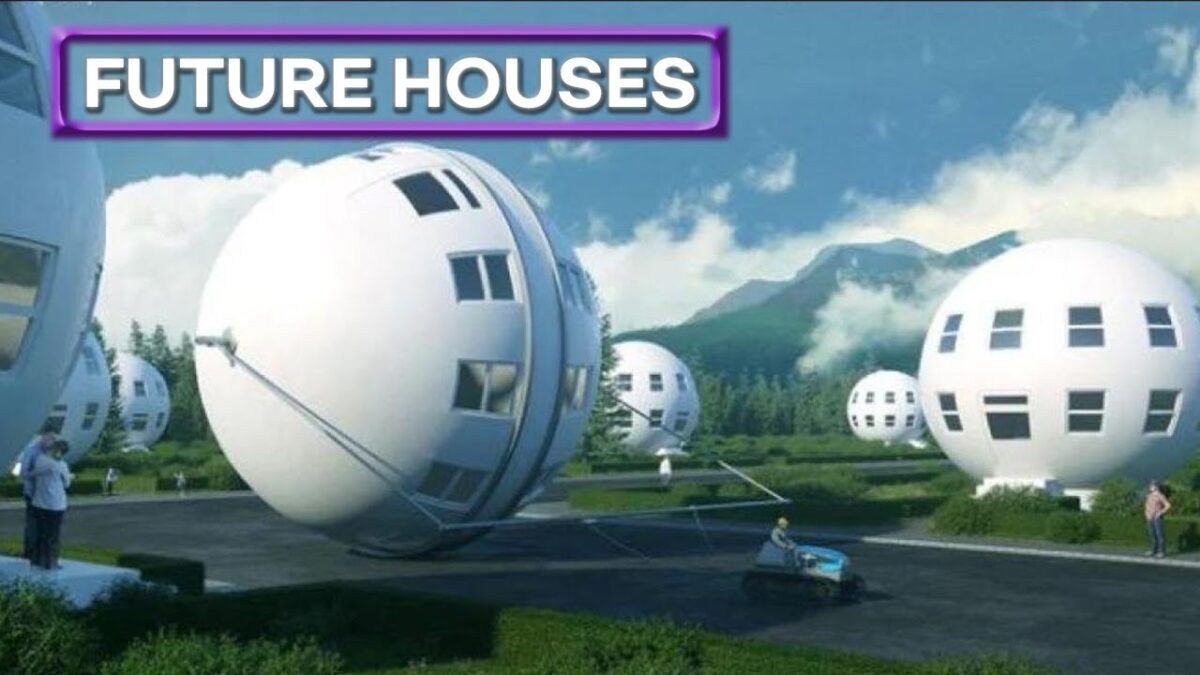
Future Technology: The Houses Of The Future

How will the houses of the future be like? The answer may seem trivial, but in this video we will discover that this is not exactly the case. Probably our homes will become energy self-sufficient and “intelligent” thanks to domotics, our future technology. But how can these two objectives be achieved? Here are the houses of the future.
– –
Subscribe for more videos ►https://www.youtube.com/c/InsaneCuriosity?sub_confirmation=1?
Business Enquiries ► Lorenzovareseaziendale@gmail.com
We have Another Channel ► “Down The Rabbit Hole” https://www.youtube.com/channel/UCqdTuLTekIsdgaIKjwj4D-A
– –
As for energy self-sufficiency, passive houses have existed for several years. The definition of passive house was coined in the early 90s by Wolfgang Feist’s Passivhaus Institute: to talk about a passive house, a building needs to consume no more than the energy equivalent of 1.5 liters of Diesel oil per square meter for heating only. Over the years it has become a standard and other design criteria and parameters have been added regarding comfort: the useful energy requirement required for heating and cooling must be less than 15 kWh per square meter in a year. Born in Sweden in 1988, passive houses then spread mainly to Germany, Austria and Holland and other Northern European countries and also to the United States, where there are two versions of “passive house” promoted by two separate entities: the Passive House Institute (PHI) and the Passive House Institute US (PHIUS). PHIUS was originally an affiliate and approved trainer and certifier for the Passive House Institute. In 2011, PHI canceled its contract with PHIUS for misconduct. PHIUS disputed PHI’s claims and continued to work to launch an independent construction performance program.

The construction of a passive house requires that you start from the foundations, with the construction of a thermal coat, that is an insulating coating on the outside of the building walls, so as to wrap it completely. We then move on to the vertical elements of the passive house through the construction of external light walls, typical of buildings with controlled consumption. The internal temperature is kept constant thanks to forced mechanical ventilation devices: a double system of pipes, with an outlet circuit and an inlet circuit. The outgoing hot air (from the kitchen, bathroom and toilet) is conveyed to a flow exchanger, where the incoming cold air receives 80-90% of the heat and re-routed inside (living room and bedrooms. bed). The external air flow, before reaching the heat exchanger, in some buildings is conveyed through a geothermal heat pump where it undergoes further heating. The ventilation systems of passive houses are silent and highly efficient (from 75% to 95% of the recovered heat) and require little electricity (about 40-50 Watts), but they can cause the problem of too dry air.
In a passive house, the use of renewable energy sources is essential. The solar panels allow you to heat the water for sanitary purposes while the mini wind turbine allows the supply of electricity. A solar thermal system can cover 40-60% of the entire low temperature heat requirement of the passive house. Tanks properly installed in the garden allow the recycling of rainwater where possible (toilet, water for the garden and plants.). Finally, the heating / cooling system chosen must be able to exploit these totally free energy sources to ensure internal comfort in the hottest and coldest seasons. Of course, passive houses do not have the same costs as a traditional house. However, they are more affordable than they were a few years ago. Those who want to build a passive house make a conscious and sustainable choice, knowing that over time the initial expense is offset by the zero environmental impact of their home. Despite the higher cost, would you like to live in a passive house? Let us know in the comments!
How to organize a ‘passive house

– –
“If You happen to see any content that is yours, and we didn’t give credit in the right manner please let us know at Lorenzovareseaziendale@gmail.com and we will correct it immediately”

“Some of our visual content is under an Attribution-ShareAlike license. (https://creativecommons.org/licenses/) in its different versions such as 1.0, 2.0, 3,0, and 4.0 – permitting commercial sharing with attribution given in each picture accordingly in the video.”

Credits: Ron Miller
Credits: Mark A. Garlick / MarkGarlick.com
Credits: Nasa/Shutterstock/Storyblocks/Elon Musk/SpaceX/ESA/ESO
Credits: Flickr

#InsaneCuriosity #FutureTechnology #FutureHouses