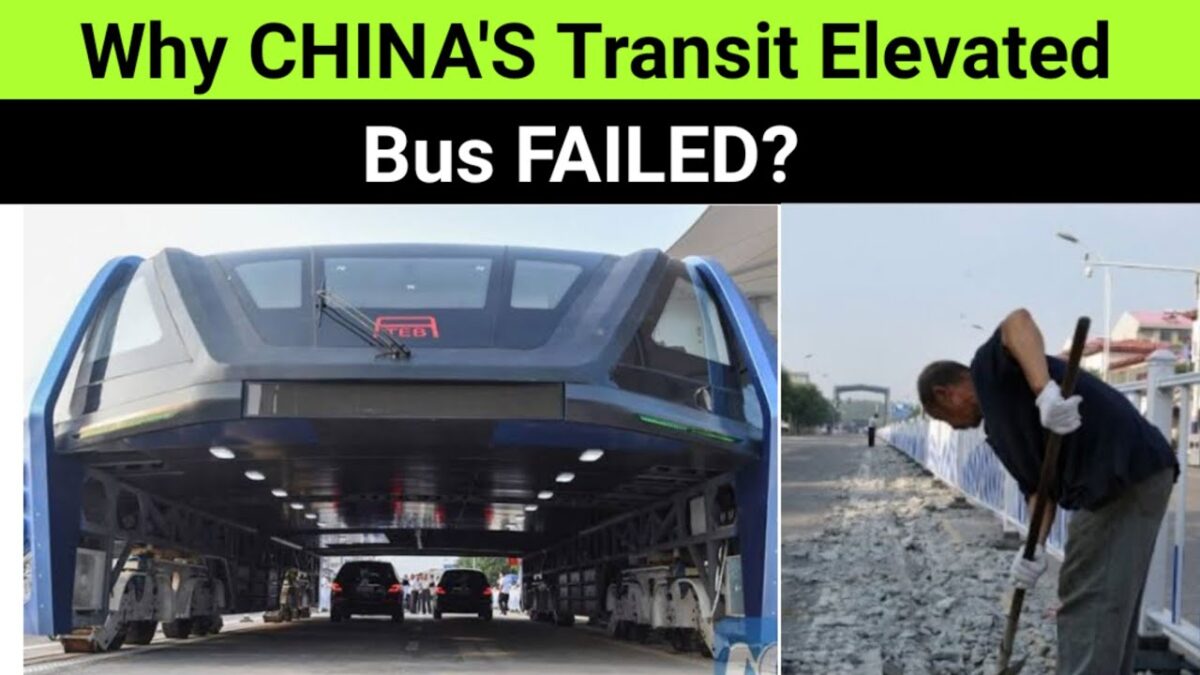
Chinese state media accused the bus of being a scam, noting that all of its funding came from a rough Chinese equivalent of Kickstarter. The “bus” was also last seen abandoned in a garage, and the company behind it appears to have vanished. That might have something to do with the revelation that the section of road it was tested on was left unusable as well. The bus was such a colossal failure that it literally destroyed everything it touched.
Disclaimer :- Video is for educational purpose only. Copyright Disclaimer Under Section 107 of the Copyright Act 1976, allowance is made for “fair use” for purposes such as criticism, comment, news reporting, teaching, scholarship and research. Fair use is a use permitted by copyright statue that might otherwise be infringing.
-This video has no negative impact on the original works (It would actually be positive for them)
-This video is also for teaching purposes.
-It is not transformative in nature.
-I only used bits and pieces of videos to get the point across where necessary.
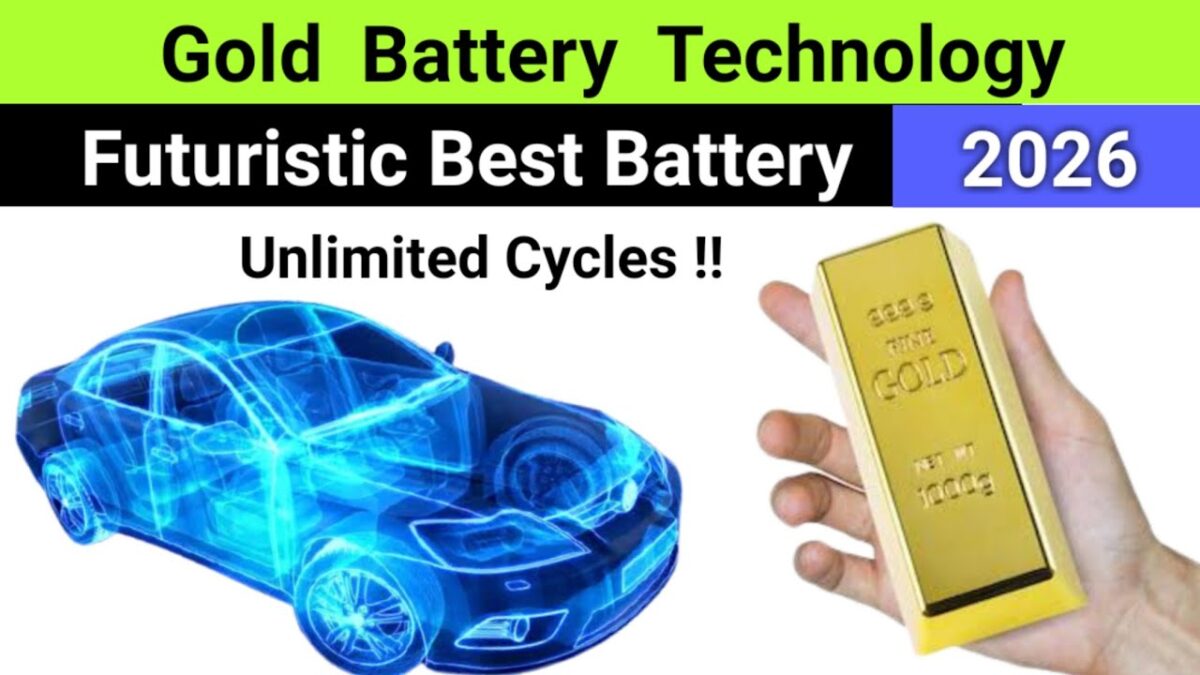
University of California, Irvine researchers have invented a nanowire-based electrode that can be recharged hundreds of thousands of times, moving us closer to a battery that would never require replacement. The breakthrough work could lead to commercial batteries with greatly lengthened lifespans for computers, smartphones, appliances, cars and spacecraft.
Scientists have long sought to use nanowires in batteries. Thousands of times thinner than a human hair, they’re highly conductive and feature a large surface area for the storage and transfer of electrons. However, these filaments are extremely fragile and don’t hold up well to repeated discharging and recharging, or cycling. In a typical lithium-ion battery, they expand and grow brittle, which leads to cracking.
Disclaimer :- Video is for educational purpose only. Copyright Disclaimer Under Section 107 of the Copyright Act 1976, allowance is made for “fair use” for purposes such as criticism, comment, news reporting, teaching, scholarship and research. Fair use is a use permitted by copyright statue that might otherwise be infringing.
-This video has no negative impact on the original works (It would actually be positive for them)
-This video is also for teaching purposes.
-It is not transformative in nature.
-I only used bits and pieces of videos to get the point across where necessary.
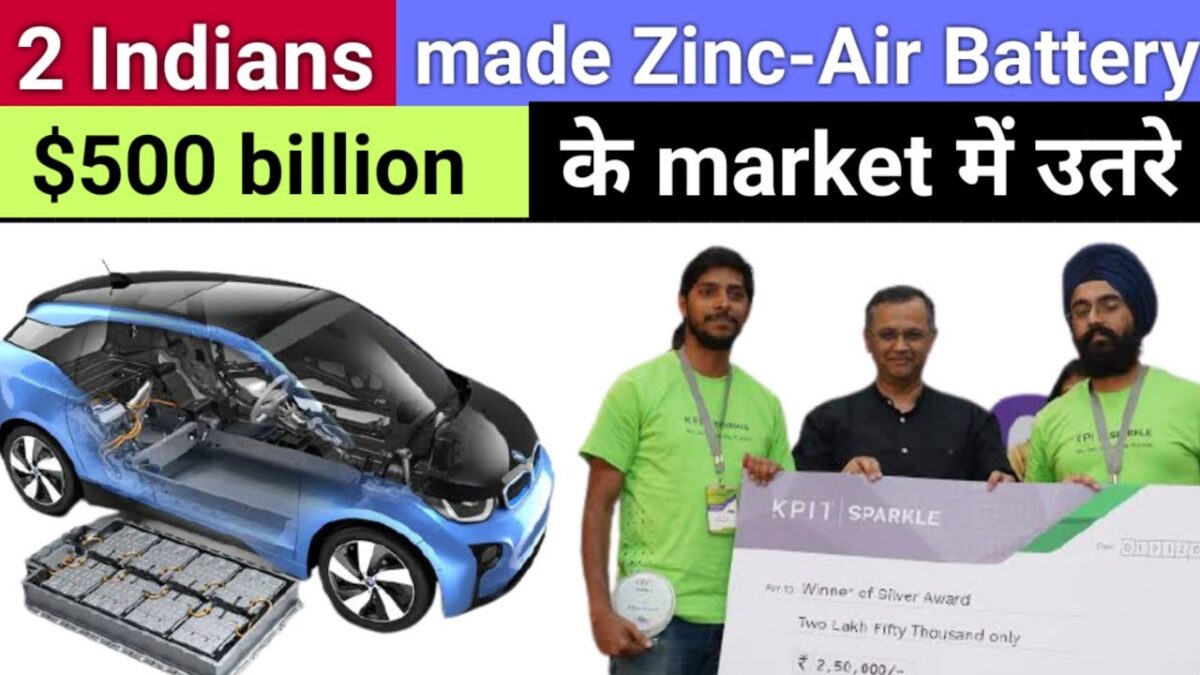
Recently, two research fellows from Jawaharlal Nehru Centre for Advanced Scientific Research in Bengaluru won the silver award at KPIT Sparkle 2020 for designing the most efficient and eco-friendly rechargeable zinc-air batteries for electric vehicles. KPIT Sparkle is an innovation platform that allows the youth to make an impact in the field of automotive software and nurture talent for the evolving mobility ecosystem
#ZincAirBattery #Battery #ElectricVehicle
100% made in india battery lithium ion battery,
new battery technology in India,
aluminium fuel cell,
aluminum fuel cell,
aluminum air battery how it works,
aluminum air fuel cell,
aluminum air battery rechargeable,
aluminum air battery India,
made in india e scooter,
electric vehicle market in India,
aluminum air battery electric car,
aluminum air battery hindi,
new battery technology,
aluminum air battery car,
aluminum air battery price,
aluminum air battery
lithium ion battery manufacturing plant,lithium ion battery
Gigadyne Nexus Aloe-Ecell
CREDITS:- https://youtu.be/cjjOXJXvbG4
_________________________________________
Song: Ikson – Home (Vlog No Copyright Music) Music promoted by Vlog No Copyright Music. Video Link: https://youtu.be/Vrz_omDwiGA
_________________________________________
_________________________________________
Disclaimer :- Video is for educational purpose only. Copyright Disclaimer Under Section 107 of the Copyright Act 1976, allowance is made for “fair use” for purposes such as criticism, comment, news reporting, teaching, scholarship and research. Fair use is a use permitted by copyright statue that might otherwise be infringing.
-This video has no negative impact on the original works (It would actually be positive for them)
-This video is also for teaching purposes.
-It is not transformative in nature.
-I only used bits and pieces of videos to get the point across where necessary.
Batteries are everywhere in today’s hyperconnected electrically propelled society. What if your electric car could travel 1000 miles on a single charge, charge in 10 minutes, and last for 1 million miles?
Sign up https://brilliant.org/ElectricFuture/
First 200 people get 20% off annual premium subscription.
Thanks to Brilliant for sponsoring this video!
Today just about every electric car uses lithium ion batteries. They’re pretty good, but ultimately are heavy and have long charging times for the amount of energy they can store.
According to Elon Musk, battery modules are the main limiting factor in electric vehicle life. In 2019 he said the Tesla Model 3 drive unit is rated for 1 million miles, but the battery isn’t as long lasting.
To handle the predicted demand explosion for electric vehicles over the coming decades, we’ll need to create a breakthrough battery that is cheaper, longer lasting, more durable, and more efficient. We must also address the issues of political and environmental sustainability to ensure batteries remain tenable in an increasingly electric future.
Over 80% of world’s lithium deposits are found in China, and current technology also relies heavily on cobalt, an element mostly found in the Democratic Republic of Congo.
After Tesla’s recent battery day, where Elon Musk announced a larger, tabless 4680 battery cell with improved energy density, greater ease of manufacturing, and lower cost. The world’s attention is now more focused on batteries than ever before, but Tesla isn’t the only show in town.
Lithium air batteries. Metal air batteries have been around for a while. You might find a little zinc air button cell in a hearing aid, for example, but scaled up aluminum and lithium air chemistries are also promising for the automotive and aerospace industries. The potential for lightweight batteries with high energy storage makes this battery technology promising. Lithium air batteries could have a maximum theoretical specific energy of 3,460 W h/kg , almost 10 times more than lithium ion. NASA researchers have also been investigating lithium air batteries for use in aircraft. This technology still has a long way to go before your take your next business trip is in an electric plane.
Nanotech Batteries. Nanotechnology has been a buzzword for several decades, but is now finding applications in everything from nanoelectronics to biomedical engineering, and body armor to extra-slippery clothing irons. Nanomaterials make use of particles and structures 1-100 nanometers in size, essentially one size up from the molecular scale. Carbon nanostructures also show great promise. Graphene is one of the most exciting of these. Amprius go one stage further with their anodes of ‘100% silicon nanowire’. The maker claims that they can achieve 500 Wh/kg which is in the range suitable for enabling electric aircraft in partnership with Airbus. Nanomaterial research is promising
Lithium sulphur batteries are one emerging technology that can offer greatly improved energy densities compared to lithium-ion. The theoretical maximum specific energy of this chemistry is 2,567 Wh/kg compared to lithium ion’s 350 Wh/kg maximum.
Solid state electrolytes. A common theme in emerging technologies so far has been researchers’ desire to develop solid state electrolytes. These would replace flammable organic liquids with stable, crystalline or glassy-state solids, or polymer-base. It is hoped that using these solid electrolytes would enable the use of metallic lithium electrodes to provide higher output voltages and allow for increased energy density. Panasonic have also been looking into solid state electrolytes. It is notable that Tesla have been partnered with Panasonic in their existing lithium-ion manufacturing capacity, but it is Toyota who have publicly announced their collaboration with Panasonic to develop next generation solid state batteries.
Samsung too are working on solid state batteries.
Dual carbon batteries. Two carbon electrodes and a non-toxic electrolyte with the ability to extract more power than from conventional lithium ion, and their ability to charge 20 times faster, and these lithium-ion variants could be the future for electric vehicles.
Better batteries are also important for the advancement of stationary storage from renewable energy sources such as solar power. Tesla is also making headway into this sector, with products like the powerwall home battery, and powerpack commercial energy storage products.
The technologies discussed in this video could have huge implications on different battery powered transportation options besides just electric cars. Imagine the potential in everything from electric bikes to electric scooters and electric boats to electric airplanes. Consumer electronics also stand to experience vast improvements in battery life in devices such as smart phones, laptops, cameras, and more. The future is electric!