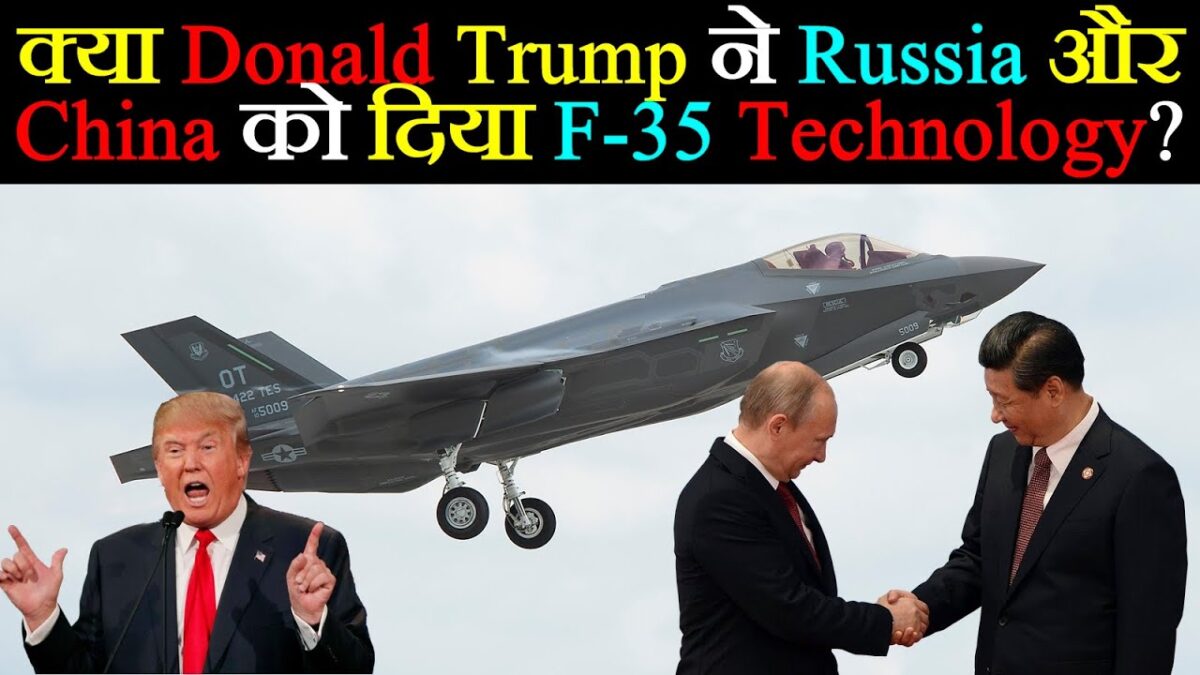
The Lockheed Martin F-35 Lightning II is an American family of single-seat, single-engine, all-weather stealth multirole combat aircraft that is intended to perform both air superiority and strike missions. It is also able to provide electronic warfare and intelligence, surveillance, and reconnaissance capabilities. Lockheed Martin is the prime F-35 contractor, with principal partners Northrop Grumman and BAE Systems. The aircraft has three main variants: the conventional takeoff and landing F-35A (CTOL), the short take-off and vertical-landing F-35B (STOVL), and the carrier-based F-35C (CV/CATOBAR).
The aircraft descends from the Lockheed Martin X-35, which in 2001 beat the Boeing X-32 to win the Joint Strike Fighter (JSF) program. Its development is principally funded by the United States, with additional funding from program partner countries from NATO and close U.S. allies, including the United Kingdom, Italy, Australia, Canada, Norway, Denmark, the Netherlands, and formerly Turkey. Several other countries have ordered, or are considering ordering, the aircraft. The program has drawn much scrutiny and criticism for its unprecedented size, complexity, ballooning costs, and much-delayed deliveries. The acquisition strategy of concurrent production of the aircraft while it was still in development and testing led to expensive design changes and retrofits.
The F-35B entered service with the U.S. Marine Corps in July 2015, followed by the U.S. Air Force F-35A in August 2016 and the U.S. Navy F-35C in February 2019. The F-35 was first used in combat in 2018 by the Israeli Air Force. The U.S. plans to buy 2,456 F-35s through 2044, which will represent the bulk of the crewed tactical airpower of the U.S. Air Force, Navy, and Marine Corps for several decades. The aircraft is projected to operate until 2070.
The first combat-capable Block 2B configuration, which had basic air-to-air and strike capabilities, was declared ready by the USMC in July 2015. The Block 3F configuration began operational test and evaluation (OT&E) in December 2018, the completion of which will conclude SDD. The F-35 program is also conducting sustainment and upgrade development, with early LRIP aircraft gradually upgraded to the baseline Block 3F standard by 2021.
The F-35 is expected to be continually upgraded over its lifetime. The first upgrade program, called Continuous Capability Development and Delivery (C2D2) began in 2019 and is currently planned to run to 2024. The near-term development priority of C2D2 is Block 4, which would integrate additional weapons, including those unique to international customers, refresh the avionics, improve ESM capabilities, and add Remotely Operated Video Enhanced Receiver (ROVER) support. C2D2 also places greater emphasis on agile software development to enable quicker releases. In 2018, the Air Force Life Cycle Management Center (AFLCMC) awarded contracts to General Electric and Pratt & Whitney to develop more powerful and efficient adaptive cycle engines for potential application in the F-35, leveraging the research done under the Adaptive Engine Transition Program (AETP).
Defense contractors have offered upgrades to the F-35 outside of official program contracts. In 2013, Northrop Grumman disclosed its development of a directional infrared countermeasures (DIRCM) suite, named Threat Nullification Defensive Resource (ThNDR). The countermeasure system would share the same space as the Distributed Aperture System (DAS) sensors and acts as a laser missile jammer to protect against infrared-homing missiles.
#GlobalConflictHindi #F35Fighter #RussiaChinaF35