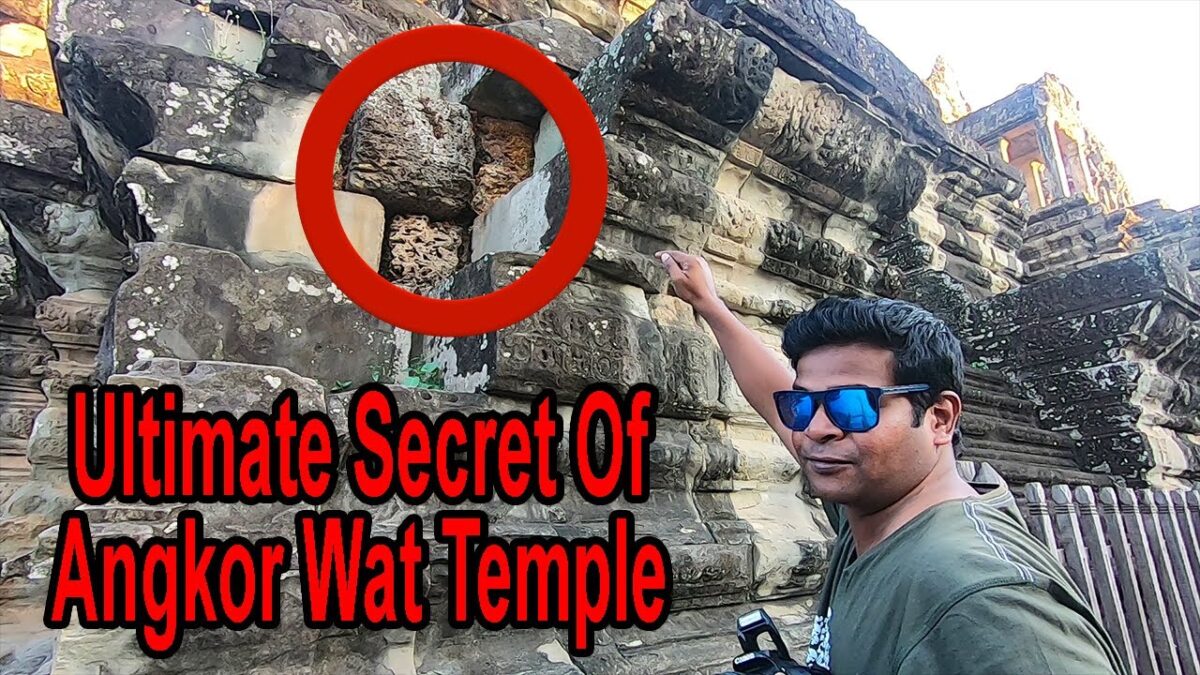
This is Inside The Stone Blocks of Angkor Wat? Ancient Engineering Technology |Part 7| Praveen Mohan

Facebook………….. https://www.facebook.com/praveenmohanfans
Instagram……………. https://instagram.com/praveenET
Twitter…………………. https://twitter.com/IamPraveenMohan
Email id – phenomenaltravelvideos@gmail.com

This is my Patreon account if you like to support me – https://www.patreon.com/PraveenMohan

Hey guys, today we are going to solve the puzzle of Angkor Wat’s Stone Work. In a previous video, I had estimated that Angkor Wat would have needed at least 10 Million tons of sandstone blocks to build the temple. As you can see, Angkor Wat is entirely made of sandstone, and it is so big that it would have needed at least that many rocks. But there is a fundamental problem with this, if you look at the quarry sites of Angkor Wat, we can be sure that 10,000,000 tons of rocks were not removed from here. And experts confirm there are no other sandstone quarries nearby from which the rocks have been taken. So where did ancient builders magically get these sandstone blocks from? If you watch till the end of the video, you will know.
“So that is where the tourists are, that is where the main temple is. This is almost the edge of the temple but this is where all information is. See this is sandstone, this is this rock basically. You can see the blocks that were used to make this temple. I don’t think these were leftovers. These are parts taken out and put here. So you can see these blocks of sandstone – this is what the entire temple is made of. These are the sandstone blocks that made the temple and you can see a bunch of them here and there is a pile of blocks which goes all the way and this is all sandstone. These are sandstone blocks, parts of pillars, I can tell right away, some make up the other structures. But you see those rocks there, that is where it gets really interesting. Can you see the difference between that rock and this rock? This rock is sandstone but that is not sandstone. I think that is volcanic basalt, that’s – Cambodians call this Lava Rock, you see how porous it is. Let us go take a look and see how this was used. See how these rocks are, right? You can tell right away that you cannot put these rocks as front pieces of a temple right? Because you see how porous they are and how rough they are. If they are carved, this is not going to look good. But why do you see these huge rectangular blocks right? You can see how many blocks here right? This entire area is full of these “Lava Rocks”. But these rocks were also used in the construction of the temple. Nobody understands this, people think it is made of sandstone but these rocks were key to the construction of the Angkor Wat temple. So let’s go take a look and see where these were used. ”
We are on the other edge of the temple, you can see tourists and tour guides walking into the temple, but remember, the information is always in places where people do not look. So I start exploring the woods nearby, normal people do not venture into this area.
And you can see something very exciting, the Angkor Wat temple is not only protected by a moat, but it has a giant compound wall, not only now, even a thousand years ago, most people would not visit this area, but this giant temple is protected by a 16 foot wall on all 4 sides. But the most important feature is the material used here.
“So this where the lava rocks were used. There is no need for dressing this up, there is no need for this compound wall to look beautiful, it was created for protective purposes, and this is why we have blocks and blocks of lava rocks. You can tell – it is not beautiful, but it will absolutely serve the purpose. And we are able to find this only if we go deep, where there is nobody. ”
This material is called basaltic laterite, and it is created as a result of volcanic eruption. I examine this wall which stretches for miles, and when I start returning back to the main premises, something hits me, this wall made of laterite does not solve the mystery of Angkor Wat’s volume of rocks. This wall probably accounts for 1 percent of Angkor Wat’s stone blocks. So, just because I found out that this 1% is made of laterite, it does not explain where 99% of the rocks, the sandstone blocks came from.

#Ancienttechnology #AngkorWat #PraveenMohan

GERMAN TANKS – Technology, Development & History | Full Documentary

The modern tank was born at the time of the First World War. The British used the rolling steel combat vehicles for the first time against German troops. Then the Germans develop the “A7V” – and in the Second World War “Panther” and “Tiger”. Ferdinand Porsche was also involved with the “Maus” in the construction of tanks during National Socialism. The documentation gives a chronological insight into the production and technology of German tanks, up to the latest models of the Bundeswehr.

? Watch more documentaries https://www.youtube.com/playlist?list=PL-5sURDcN_Zl8hBqkvZ6uXFpP3t55HU9s

? Subscribe our full documentary channel
https://www.youtube.com/channel/UCBAeFXaLV1ZqKqc-Uf3pKaA?sub_confirmation=1

#Tanks #Germany #Documentary

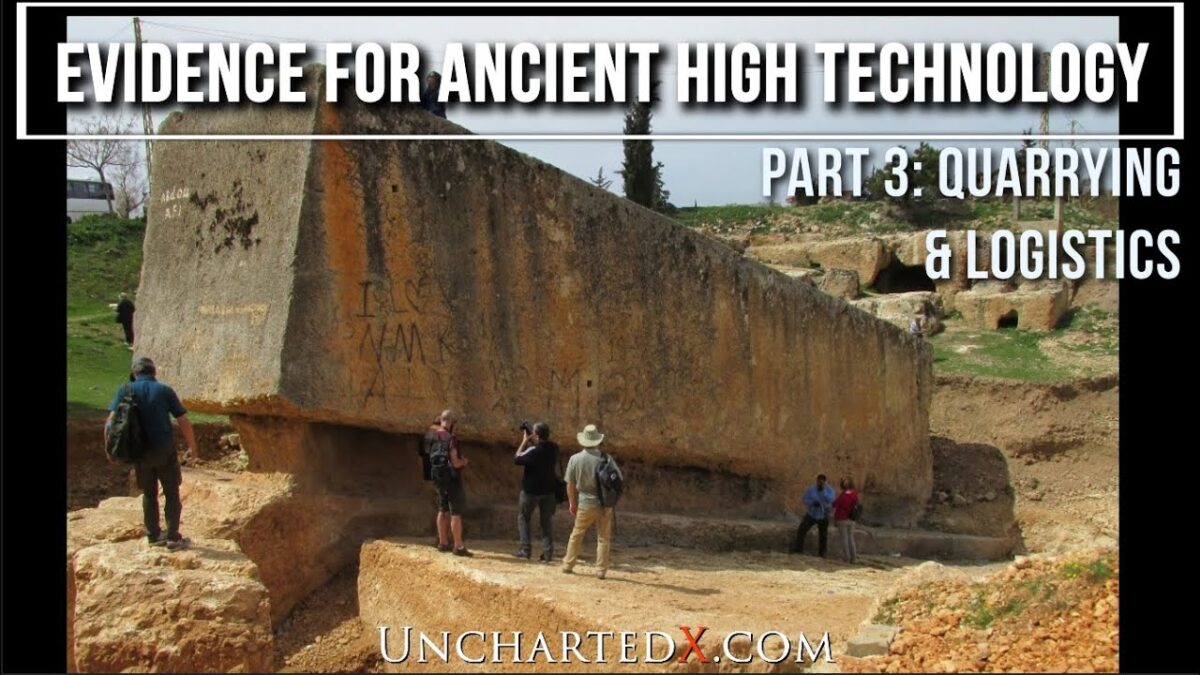
Quarrying and Moving Ancient Monuments! Evidence for Ancient High Technology, Part 3…

Part 3 of my investigation into the evidence for ancient high technology! In this video, I clarify the arguments made in previous episodes, respond to some of the discussion around these topics, and then dive into the details of logistics and construction methodologies surrounding the creation and movement of some of antiquities largest and heaviest monuments from around the world. From the Unfinished Obelisk at Aswan, to the mighty Trilithon and recent disoveries at Baalbek, how can these ancient achievements be explained with the primitive methods of ancient civilizations?

Links:
Ancient High Technology – Part 1, Machining: https://youtu.be/6KUDu40BC5o
Ancient High Technology – Part 2, Precision: https://youtu.be/YZFN29FdCM0
The Mysterious Tube Drills of Ancient Egypt: https://youtu.be/KFuf-gBuuno
The Serapeum of Saqqara, Part 1, Introduction: https://youtu.be/VGtDAHRK8s0
The Serapeum of Saqqara, Part 2: The Boxes: https://youtu.be/c6f7KPD3QUA
The Serapeum of Saqqara, Part 3: Precision: https://youtu.be/frhysD0G4mg
The Serapeum of Saqqara, Part 4: Liquid Polish: https://youtu.be/-PgvvdIBI8E
The Serapeum of Saqqara, Part 5: Conclusions: https://youtu.be/qLrTCYMFUbg
Serapeum Addendum: Naming: https://youtu.be/12IpEwAGbTY
Analysis of the Thunderstone: http://grahamhancock.com/phorum/read.php?1,1049641,1049641

Any footage or images sourced from the Internet for this presentation were done so under the Fair Use provision of Section 107 of the Copyright Act of 1976, for purposes of criticism, comment, news reporting, scholarship, and research.

Please like and subscribe! Leave a comment with your thoughts!
UnchartedX: https://UnchartedX.com
Official UnchartedX Merch store! Support the channel, get some natty threads:
https://teespring.com/stores/unchartedx

Support my work: https://unchartedx.com/support
Paypal tip jar: https://paypal.me/unchartedx
Patreon: https://patreon.com/unchartedx
SubscribeStar: https://subscribestar.com/unchartedx
Bitcoin/crypto wallet send address: bc1qtg5kaq0s7434fsulm7w94zsqkww57ueel4f4ed

Contact me on:
Twitter: http://twitter.com/unchartedx1
Instagram: http://instagram.com/unchartedx7
Email: info@unchartedx.com

0:00 Introduction
1:44 Important Internet Bidness
5:14 Re-stating arguments
8:04 Tube Drill commentary
11:40 The 4-step test for experimentalists
18:32 Moving Megaliths
20:06 The Obelisk and the Thunderstone
23:41 Pounding Stones?
28:26 Other examples
32:08 Baalbek
38:46 Logistics of the Serapeum
42:07 Conclusion
45:00 Postscript

Book Review: Textbook of Pistol Technology and Design

*** I released this review early to my Patreon audience, who proceeded to buy up all the remaining copies. The printer is running another edition which should be available before the end of August. Sorry for the inconvenience! ***

https://amzn.to/3iAGyqk

Peter Dallhammer is a mechanical engineer who works for the Walther company, and has written an excellent book on firearms manufacture. If you were going to design a university program around the design and production of small arms, his “Textbook of Pistol Technology and Design: Production, Principles, Progress” could be a foundation of the program. Dallhammer focuses his scope on the 9mm semiautomatic handgun, and takes the reader through the whole scope of design and production. The book is divided into four main sections:

– Production Technologies. This describes the applications and pros and cons of all the major methods of making parts. Machining, molding, MIM, stamping, and so on, plus several types of surface treatments.

– Pistol Principles. This covers all the different options for mechanical design of a pistol. Function and design options for the major components, how different safeties work, how to choose spring types, and some legally-relevant issues like micro stamping and electronic “smart” gun systems.

– US Regulations. The legal elements involved in marketing a pistol in the US. This includes information on importation, as well as both Federal and state level regulations. This is perhaps less useful for an American reader who is probably largely familiar with it, and it is also subject to change if laws change.

– Case Studies. Dallhammer assesses 9 different pistols based on all the criteria explained in the previous sections. These include Glock and H&K, as well as Caracal (remember them?), Taurus and KelTec.

For the person who wants to know what really is involved in designing, manufacturing, and marketing a handgun (or other firearm), this is an outstanding resource. It is not a book with all the answers, but it will go a very long way in ensuring you know all the right questions to ask.

http://www.patreon.com/ForgottenWeapons

https://www.floatplane.com/channel/ForgottenWeapons/home

Cool Forgotten Weapons merch! http://shop.bbtv.com/collections/forgotten-weapons

Contact:
Forgotten Weapons
6281 N. Oracle #36270
Tucson, AZ 85740