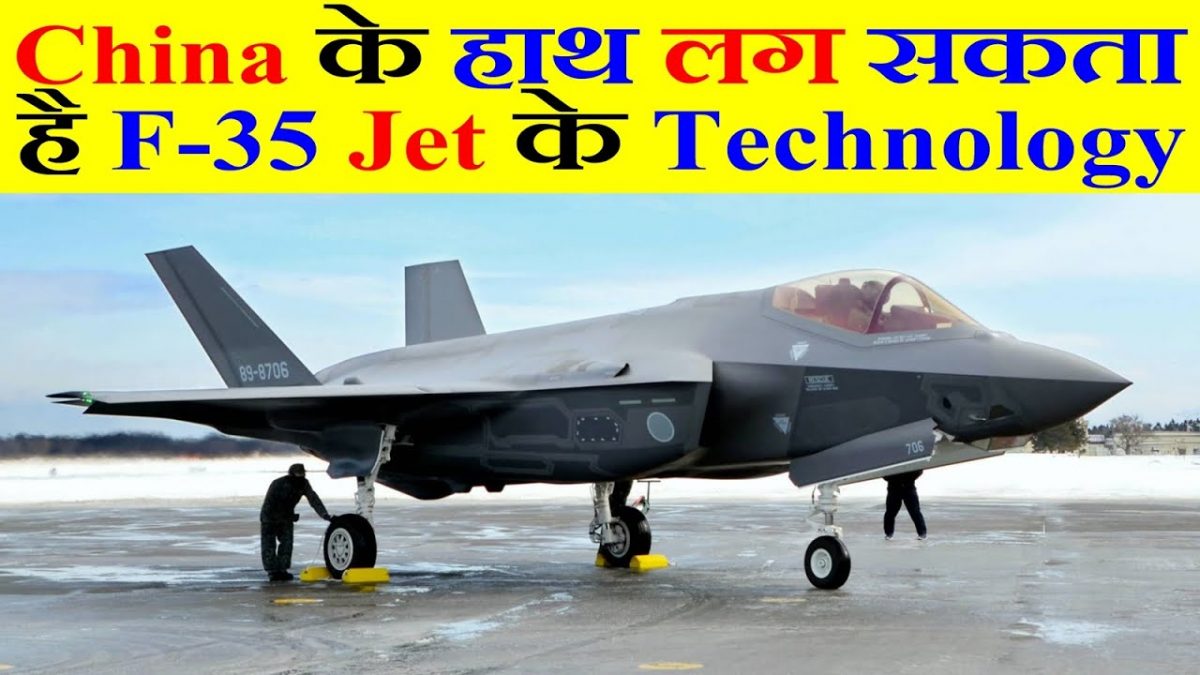
The Lockheed Martin F-35 Lightning II is an American family of single-seat, single-engine, all-weather stealth multirole combat aircraft that is intended to perform both air superiority and strike missions. It is also able to provide electronic warfare and intelligence, surveillance, and reconnaissance capabilities. Lockheed Martin is the prime F-35 contractor, with principal partners Northrop Grumman and BAE Systems. The aircraft has three main variants: the conventional takeoff and landing (CTOL) F-35A, the short take-off and vertical-landing (STOVL) F-35B, and the carrier-based (CV/CATOBAR) F-35C.
The aircraft descends from the Lockheed Martin X-35, which in 2001 beat the Boeing X-32 to win the Joint Strike Fighter (JSF) program. Its development is principally funded by the United States, with additional funding from program partner countries from NATO and close U.S. allies, including the United Kingdom, Australia, Canada, Italy, Norway, Denmark, the Netherlands, and formerly Turkey. Several other countries have ordered, or are considering ordering, the aircraft. The program has drawn much scrutiny and criticism for its unprecedented size, complexity, ballooning costs, and much-delayed deliveries, with numerous technical flaws still being corrected. The acquisition strategy of concurrent production of the aircraft while it was still in development and testing led to expensive design changes and retrofits.
The F-35B entered service with the U.S. Marine Corps in July 2015, followed by the U.S. Air Force F-35A in August 2016 and the U.S. Navy F-35C in February 2019. The F-35 was first used in combat in 2018 by the Israeli Air Force. The U.S. plans to buy 2,456 F-35s through 2044, which will represent the bulk of the crewed tactical airpower of the U.S. Air Force, Navy, and Marine Corps for several decades. The aircraft is projected to operate until 2070.
he F-35 is designed to require less maintenance than earlier stealth aircraft. Some 95% of all field-replaceable parts are “one deep”—that is, nothing else need be removed to reach the desired part; for instance, the ejection seat can be replaced without removing the canopy. The F-35 has a fibermat radar-absorbent material (RAM) baked into the skin, which is more durable, easier to work with, and faster to cure than older RAM coatings; similar coatings are currently being considered for application on older stealth aircraft such as the F-22. Skin corrosion on the F-22 led the F-35’s designers to use a less galvanic corrosion-inducing skin gap filler and to use fewer gaps in the airframe skin needing filler and better drainage. The flight control system uses electro-hydrostatic actuators rather than traditional hydraulic systems; these controls can be powered by lithium-ion batteries in case of emergency. Commonality between the different variants allowed the USMC to create their first aircraft maintenance Field Training Detachment to apply the USAF’s lessons to their F-35 operations.
The F-35 was intended to be supported by a computerized maintenance management system named Autonomic Logistics Information System (ALIS). In concept, any aircraft can be serviced at any F-35 maintenance facility and for all parts to be globally tracked and shared as needed. Due to numerous problems, such as unreliable diagnoses, excessive connectivity requirements, and security vulnerabilities, program officials plan to replace ALIS with the cloud-based Operational Data Integrated Network (ODIN) by 2022.
#GlobalConflictHindi #F35VsChina #F35UAE